Introduction
In the Archipelago of San Andrés, Old Providence, and St. Ketlina, migration and residency are restricted by law aiming to protect the “cultural identity” of the Raizal People. The legal framework restricting migration, which categorizes individuals as raizal, has far-reaching implications for both the collective and individual legal, political, and self-understanding of the Raizal people. In recent years, political campaigns and demonstrations centred on the “Raizal” identity have increasingly framed migration as a key point of contention, with protests calling for stricter measures against irregular migration as a crucial step to protect “Raizal” identity.
This paper argues that the interaction between the law and identity has driven a process of “raizalization” in the Archipelago, in which the law not only plays a role in shaping raizal identity but also interacts with other processes that influence politics. By exploring how the law categorizes individuals as “Raizal” and how this legal identity interacts with broader social dynamics, this paper seeks to show how the ethno-racial identity has crystallized through the interplay of law, politics, and cultural self-understanding.
Using an interpretivist approach, this paper draws on my personal positionality as a Raizal woman and human rights lawyer to explore identity-making processes in the Archipelago of San Andrés, Old Providence, and St. Ketlina. Using qualitative methods, the research is based on secondary data, including legal frameworks, court decisions, news articles, videos, and academic literature. I apply discourse and legal analysis, operationalizing identity-making processes such as categorization, self-understanding, and commonality (Brubaker & Cooper, 2000).
The paper is divided into two main sections. First, I examine the flexible and dynamic process of legal categorization during the law-making phase of migration restrictions, ultimately leading to the legal construction of the “Raizal” identity. In the second section, I analyse how contemporary discourses by Raizal people reflect the ongoing impact of these socio-political identity-making processes, particularly in the context of current migration flows. Here, I show how raizal identity has become legally, spatially, and ethnically framed, with political movements often grounded in space-based demonstrations, legal rhetoric, and ethnic discourse. Together, these sections demonstrate how law and identity are mutually constitutive, shaping both the political landscape and the lived experiences of the Raizal people.
Categorization of people as “Raizal” by legal framework in the Archipelago of San Andrés, Old Providence, and St. Ketlina
The legal framework imposing restrictions on migration has been shaped by the way Raizal people understand their identity and differentiate themselves from broader national identity frameworks and assert their cultural and territorial rights. Building on Avella (2020), they use ethnicity as a political tool to assert their claims, creating a unique political subjectivity in the process (Murji & Solomos, 2014). This section will explore how the law-making process has facilitated the construction of the Raizal identity and was informed by Raizal identity politics. I will analyse the flexible and dynamic nature of the legal categorization process and how this legal framework contributed to the crystallization of the raizal identity.
From “islander-native” to “Raizal” in the lawmaking of migration restrictions
The Archipelago of San Andrés, Old Providence and St. Ketlina has a particular history of settlement and colonialism that has influenced identity-making and politics. The first permanent settlers of the Archipelago were English Puritans and Dutch settlers that arrived around 1629. After finding Providence Island, English Puritans organized expeditions to establish a colony for tobacco and cotton production, bringing enslaved Africans and Miskitos indigenous in 1633 (Feiling, 2017; Kupperman, 1993; Newton, 1914). In 1641, the Spanish Empire started invading the Archipelago, capturing settlers, selling enslaved Africans, and expelling people (Crawford, 2009, p. 19). With these incursions, the Archipelago was uninhabited for almost a century, and it was “slowly repopulated by settlers from Jamaica, Curacao, Scotland, and Ireland” and enslaved Africans (Meisel Roca, p. 2016, 14). The process of resettlement is undocumented, but the Archipelago was the place of a large process of “informal” migration by English, Dutch Caribbean, and Spanish settlers, as wells as enslaved Africans, particularly to San Andrés Island in the early eighteenth century (Cabrera Ortiz, 1980; Parsons, 1964).
This history of migration, settlement, and slavery resulted in a racially diverse population that developed characteristics described as culturally and ethnically different from mainland Colombia (Crawford, 2011). According to Taylor (2015), the Archipelago was a place of encounters and racial mixture that configured an identity that is singular and multiple simultaneously. As the descendants of the first permanent settlers of the Archipelago, this population is described as ethnically and racially different from mainland Colombians in terms of social and cultural attributes such as Creole language, religion, music, cuisine, and traditions (Crawford, 2009).
Incorporated into Colombia in the early 19th century, the Archipelago maintained a degree of autonomy due to its geographical distance and cultural differences from the mainland. However, this changed in 1912 when the Colombian government created the National Intendancy of San Andrés and Providencia, asserting greater administrative control over the islands. This marked the beginning of a process of Colombianization, in which the state sought to integrate the Archipelago into the national identity through policies such as the imposition of Spanish as the official language and the promotion of Catholicism over Protestantism (Díaz et al., 2016; Eastman Arango, 1990). This process intensified with the establishment of the free port in 1953, which transformed San Andrés into a commercial hub and attracted waves of mainland Colombian migrants seeking economic opportunities. This migration significantly altered the island’s demographic composition, with the Raizal population becoming a numerical minority by the late 20th century (Meisel Roca, 2016). For example, a 1938 census reported that 6.232 inhabitants of the Archipelago department were Colombian (95 %), while 296 were of foreign origin (5 %). The same census reported that 6.442 inhabitants belonged to the Catholic faith, while 86 people stated they were not. After the establishment of the free port status in 1953, the number of inhabitants classified as immigrants grew considerably. The total population of the Archipelago increased from 5.675 in 1951 to 16.731 in 1973, with an increase of 194,9 percent (Rivas, 1948; Universidad de Cartagena, 2017).
While the economic impact of these policies is well documented, their socio-political consequences were equally profound. The demographic shift fueled tensions between Raizals and mainlanders, particularly as state policies failed to protect the island’s original inhabitants from cultural and political marginalization. Migration to the islands was not a singular event but an ongoing process that gained momentum throughout the 20th century. Initially driven by the state’s administrative expansion, it was later exacerbated by the economic incentives of the free port and the state’s broader nation-building project (Díaz et al., 2016; Eastman Arango, 1990; Meisel Roca, 2016). These developments laid the groundwork for identity politics in the Archipelago, as the now Raizals sought to preserve their cultural and territorial rights in response to increasing mainland influence.
By 1960s, these dynamics resulted in the development of political movements based on a distinct identity, especially in the 1960s similar to the broader context in the Caribbean region. In 1968 the “Unite Archipelago Club” emerged in Bogotá from the idea of “the island for the islander,” calling themselves the leaders of “isleñismo” (islander-ism) (Ortiz Roca, 2013). Like Antillanité in the Caribbean (Dash, 1995), Isleñismo was context-specific to pursue recognition of a distinctive spatially configured ethno-racial consciousness. In 1977, political demonstrations led by students were based on raising awareness of the adverse effects of the government’s decisions on the population in the Archipelago (Ortiz Roca, 2013). Different discourses were framed in terms of political participation and consciousness, such as public calls like “People, when will you become aware” (Ortiz Roca, 2013). Thus, it was a moment of transformation towards more fixed identity politics that further continued in the 1980s (Taylor, 2015).
In 1984, the Sons of the Soil (sos) Movement emerged in the Islands, calling for the protection of “natives.” They presented a proposal for a bill before the House of Representatives in 1987. Seeking that the bill would be introduced before Congress, it used the term “Raizal” for the first time, accompanied by the term “islander,” and ascribed ethnic character to identity as follows:
From an ethnologic and sociological perspective, the Raizal islanders constitute a distinct people. Based on the degree of economic-social development of the activities of the members of this ethnic group, we can assert that, from a scientific perspective, it constitutes a nationality, which does not deny the full Colombian identity of the natives, but it clearly establishes their status as an ethnic minority within Colombia […]. (House of Representatives, 1987, cited in Ortiz Roca, 2013, p. 51)
This proposed bill shows the understanding of identity in terms of cultural differences congealed into a more “fixed” identity. It expressively asserts that they consider themselves an “ethnic group,” arguing groupness and commonality. In Brubaker and Cooper’s terms (2000), this means that there is a “sense of belonging to a distinctive, bounded group, involving both a felt solidarity or oneness with fellow group members and a felt difference from or even antipathy to specified outsiders” (2000, 19). Moreover, it mentions that their identity is similar in form to national identity. Considering the previous assimilation into the broader Caribbean experience, it seems that this comparison to national identity also serves as way of positioning themselves similarly to other Caribbean identities. Simultaneously, it differentiates from those by saying they are Colombians.
Additionally, the use of the term “minority” reflects the language of the law. At the time, minority rights were recognized under international law (OHCHR, 2010). This language of the law not only pursues law-based claims but also, considering the preceding internationalization in identity politics, shows how international law and politics of rights also interacted with self-understanding and political campaigning. Some authors call this a process of vernacularization in which ideas of the international sphere are translated into local contexts (Merry & Levitt, 2017). From such interaction with the law, there was a need to justify the elements that made them a “minority-ethnic group.” The bill continues to describe the “Raizal-Islander” population in terms of ethnic attributes, emphasizing language, which was a crucial element in the Caribbean identity politics as well:
A segment of Colombians, the Raizal islanders of the Archipelago of San Andrés and Providencia, constitute a distinct people. In the first place, they speak their own language, a dialect of English, which-far from being a simple “mixture” of French, Dutch, and Spanish, although it has influences from such languages-is rather a preservation of “Elizabethan” English (old English) with an African-American phonetic influence. (House of Representatives, 1987, cited in Ortiz Roca, 2013, p, 51)
Another critical element in the bill is the implicit justification of a racially creolized population. It asserts that the “Raizal-Islander” people are of African descent, based on the historical context of settlement and colonialism in the Archipelago.
The Raizal island people originated from freedmen, escapees from the Jamaican plantations, brought earlier to the Americas by the Royal African campaign. From the Scots brought as servants to the islands. From the slaves brought by the English to San Andrés before 1786 and those who arrived after Spanish domination was restored. (House of Representatives, 1987, cited in Ortiz Roca, 2013, p. 51)
Finally, the fact that the first documented time that the “Raizal” term was used by islander people in reference to themselves is a proposal for a new law strongly reflects how law-making had a vital role in identity-making. As such, the bill proposed specific legal provisions to determine who was a “Raizal-Islander” that, drawing from Brubaker and Cooper (2000), sought to transform a form of self-categorization into an external and legal form of categorization. Organized in the form of articles, its framing article stated:
c.- One of their parents, one grandparent, and at least two great-grandparents were born in the Archipelago.
c.- The father, at least three grandparents, and one of his grandparents were born in the Archipelago. (House of Representatives, 1987, cited in Ortiz Roca, 2013, p. 51)
Thus, “Raizal-Islanders” were described in kinship terms in connection to birthplace and ascendants, like citizenship law does (Calavita, 2007). Citizenship law is understood as granting rights to exclusion and inclusion, which creates the right not to be excluded for political community members (Achiume, 2019; Brubaker, 2010; Foner & Simon, 2015). The proposed bill reflects membership issues in a contested migratory context and resembles the legal form of citizenship and immigration law but within the same territorial jurisdiction. In this case, the categories of “islander,” “native,” and “Raizal” were used to determine the membership and differentiation of “natives” from those migrating mainly from Colombia. Yet, these categories were used with a certain degree of flexibility and even as interchangeable or combinable despite the form of the law. The bill did not achieve the legislative process. A few years later, the Constitutional Assembly became a platform for the Archipelago’s identity-based efforts. While a sense of distinct identity existed before 1991, it was not legally institutionalized until the new constitutional framework (Valencia, 2011; Valencia Peña, 2024).
In 1991, Colombia convened its Assembly to draft the current Constitution, marking a pivotal moment in the country´s legal and political history. One of its significant achievements was the formal recognition of Colombia as a pluriethnic and multicultural nation (Article 7 of the Constitution). This framework provided a crucial opportunity for historically marginalized communities, including the Raizal people, to define their identity in legal terms. Rooted in international human rights law, the Assembly granted “superior” status to human rights treaties ratified by Colombia and sought representation of “minorities” in drafting the Constitution. Two Indigenous representatives were included (Fox et al., 2012), reflecting a broader movement for collective property rights and self-governance among Indigenous Peoples and Afro-descendant communities (Rodríguez Arango, 2021). This law-making framework and indigenous claims seem to have influenced the discourse around identity in the Archipelago. Following the internationalizing movement of the 80s, the Assembly framework reinforced the law-based discourses in the Archipelago to present identity-based claims at the national level.
By 1991, the “islander-native” population had become a numerical minority in the Archipelago (Meisel Roca, 2016). In this context, they sought to make claims on administration, natural resources preservation, and identity protection. Despite not being officially included in the constitutional deliberations, the Indigenous movement invited people of African descent, including the Archipelago’s population, to participate in their internal consultations. The sos movement responded, presented their claims of self-determination, and described the population in terms of rootedness in the land (Uni, 2013). This context reflects the need for discourses of indigeneity and land-based protection translated into the language of rootedness and nativeness. Such discourses brought the category “Raizal” into the preparatory work of the Constitution, as “Raizal” is derived from the Spanish word for “root” (Jáuregui Sarmiento, 2021; Ortiz Roca, 2013).
With the consistent discourses about land, the type of legal protection needed to achieve such a purpose is crucial in this analysis. Both the international and national frameworks informed islanders’ claims, but the context of the Archipelago was different because most of its population was mainland Colombians (Bocarejo, 2014). Thus, lawmakers needed to find a way to recognize the connection between identity and land without adversely affecting mainland residents’ rights (Court Decision C-530 of 1993, 1993). This was achieved in the form of migration restrictions. The interaction between self-understanding, political campaigning, and law created a need for a particular legal form associated with territory. Immigration law, in its form, configures specific spatial determinations, such as categorizing people in relation to space (Calavita, 2007). In its nature, it can enclose space and identity, as it did in this case, where the law resembles immigration law in restricting mobility at the internal and international levels.
Afterward, the Colombian Constitution (Constitution Enacted by the Constitutional Assembly of 1991 in Colombia, 1991) established in its Article 310 that Congress could impose migration restrictions using the language of nativeness, identity, property, and land:
limit the rights of freedom of movement and residency, adopt population density controls, regulate the use of the land, and impose special conditions for the alienation of land property with the purpose of protecting the cultural identity of native communities, preserving the environment, and the natural resources of the Archipelago […] the Departmental Assembly will guarantee the institutional expression of the Raizal communities of San Andrés.
Under this provision, the national government adopted the Decree No. 2762 of 1991 (1991). Like a visa scheme, this law limited the freedom of circulation and residency in the Archipelago, set the conditions to access permanent and temporary residency, and created a local migration control office called OCCRE (Office of Circulation Control and Residency), aimed at regulating residency and circulation in the Archipelago. Despite all the preceded politics, the provisions of the Decree focus on overpopulation and natural resources issues. It does not grant special treatment to islander-natives. The only distinction it makes is regarding the rights of “native” descendants, stating that descendants of “native” parents are granted residency rights that cannot be revoked. It mentions identity protection in Article 34, which states that the law would be disseminated as “a necessary intervention by everyone in the protection of the cultural identity of native communities” (Decree No. 2762 of 1991, 1991).
Although it pursues the protection of cultural identity as one of it aims, the Decree uses somewhat neutral legal provisions lacking a direct relationship between migration restrictions and identity protection. This migration legal framework reflected the flexible and interchangeable use of different terms to categorize the island’s population. Although the categorization made by the law was relatively mild at this time, it was already a reflection of the interaction between law, identity understanding, and politics during the constitutional construction of 1991. Still, this legal framework would be questioned a couple of years later, requiring a more fixed categorization that was crystalized during the revision of the law made by the Constitutional Court in 1993.
It is worth noting that the legal recognitions in the 1991 Constitution laid the groundwork for subsequent legislative advancements concerning ethnic communities, territorial rights, and affirmative action. Furthermore, it set the stage for Raizal leaders to assert ethnic-based legal arguments in defence of migration laws before the Constitutional Court in 1993. The Court´s ruling that year must be understood within this broader context of historical and legal developments, which reflects the shifting discourse on ethnicity, identity, and legal protection in Colombia.
The legal crystallization of the “Raizal” identity
In 1993, a Colombian citizen presented a constitutional lawsuit against Decree 2762 of 1991. The main argument was that the migration restrictions discriminated against Colombian citizens and “placed them in an inferior position compared to natives due to their origin, that is, being a mainlander rather than an islander” (Constitutional Court of Colombia, 1993, 16). In this constitutional process, the Constitutional Court reviews the text of the law and determines whether it violates fundamental rights. In this case, the Court had to review if the migration restrictions violated equality, freedom of movement, residency, work, education, and political participation of mainland Colombians.
In the contested nature of a trial, the constitutional process is open to citizens to intervene, participate in public hearings, and gather evidence (Ramírez Nárdiz, 2016). This makes the process a political campaigning forum and restricts politics to the form of the law in its language and claims, shaping citizen discourses. In this sense, the Court decision includes a summary of such interventions and the evidence on which its reasoning and ruling are based. Notably, this evidence emphasized the demographic and environmental challenges of the Archipelago. However, it is worth focusing on the textual references to the “raizal” identity to describe its interaction with identity politics and migration law which led to the crystallization of an ethno-racial “new” and distinctive identity.
Unlike other ethnic groups in Colombia whose legal recognition was historically tied to land rights or ancestry (Restrepo, 2013), raizal identity formation occurred through a different process - one mediated by migration law rather than conventional ethnicization policies (Valencia, 2011). This distinction is evident in the Court´s legal reasoning, where “Raizal” identity is positioned as distinct from mainland Colombians based on cultural markers such as language, religion, and traditions, rather than being formally recognized through Indigenous or Afro-Colombian frameworks (Guevara, 2007; Ortiz Roca, 2013; Valencia Peña, 2024). The Court´s ruling thus illustrates how legal categorization contributed to identity-making, reinforcing Raizalization as a distinct phenomenon shaped by creolization and migration law.
During the Court procedures, the islander-native leaders participated significantly at the time. One of the interventions made by a Raizal person argued that the granted rights were not limited only to “islander Colombians” but to “all Colombians” that reside in the Archipelago, and the Court clarified that this is a term used to refer to “natives” of the Archipelago (Constitutional Court of Colombia, 1993, 22). This shows that the terms were still used interchangeably, with a milder language of differentiation between residents of the Archipelago by positioning themselves as Colombians as well. The Sons of the Soil’s intervention stated more clearly that there was a distinction in the identity of people living in the Archipelago, referring to them as “islanders” and “Raizals.” They argued that the migration measures were needed because “Raizals” and “mainlander residents” were suffering the consequences of migration as follows:
It was said that the people from San Andrés did not know God and did not speak Spanish. Therefore, they were not Colombians. It was recommended to Colombianize them, and so it was done. They were subjected to the Concordat regime,2 their schools were closed, their bibles were burned, their names were translated, they were prohibited from speaking English in schools, monolingual Spanish-speaking teachers were imposed on them, and their non-Catholic marriages were invalidated. Through Law 54 of 1912 and the creation of the free port, the presence of residents-“true Colombians”-was imposed, making islanders not beneficiaries but victims of the changes occurring in their land. As a result of these errors, both the RAIZALS AND THE CONTINENTAL RESIDENTS suffer the consequences today. (Constitutional Court of Colombia, 1993, 23, emphasis in original)
This statement uses legally based discourses. It does not only relate to the consequences of legal measures on the identity but also includes the category of “victim,” which can be related to the interaction of politics with international human rights law at the time. Like a court process, as a space of contestation of rights, this is significant and can be read as an attempt to use stronger legal wording and politics by Islanders. It is predominantly based on the idea of harm to be repaired based on law along with identity as inherited in such political claims (Bernstein, 2005).
During a public hearing on May 21 of 1993 before the Court, the Sons of the Soil leaders stated that “in the name of the people of San Andrés, in particular the Raizal community responsible for the national sovereignty in this territory, and who have defended it in every opportunity, we come to request this for the survival of a community, an ethnic group, a culture, some values, some principles located in a territory that needs saving” (Constitutional Court of Colombia, 1993, p. 44). Against these claims, the plaintiff argued that the migration restrictions fall into individualizations that ignore the common good, favouring a few in detriment of the majority (1993, p. 44). However, there were seven further interventions from government officials and Archipelago’s leaders that were arguing in favour of the migration law. Most of the arguments focused on preserving natural resources and overpopulation but included some statements on protecting “ethnic minority” and “cultural identity.” One Island congressperson even argued that the law was needed to preserve “religion,” “language,” and “culture,” and it was the result of listening to “natives” and “mainlanders” (1993, p. 46).
Besides public interventions, the Court also gathered evidence. It officially visited the Archipelago on May 4, 1993, and collected 32 documents. All these documents were reports about the demographics and natural resources of the Archipelago. Only two mentioned that migration was affecting natives and creating social tensions between them and mainlanders. Having this information, the Court had to review the text of the Decree and decide on its constitutionality. As a court decision, it had to make clear justifications for its ruling and frame it under the existing legal framework. In this sense, the Court decision is, in its nature, legally construed, restricted in the legal sense, and informed by the participants’ discourses, showing itself an interaction between different social processes. Under this idea, the Constitutional Court stated in its reasoning that these measures aim to protect “the cultural identity of the Raizals” (1993, p. 71), crystallizing the category of “Raizal” as the primary form of categorization:
The culture of the Raizal people of the Islands is different from the culture of the rest of Colombians, particularly regarding language, religion, and traditions, which grants the Raizal a certain identity. […]
However, the increase in emigration to the Islands, both by non-resident Colombians and foreigners, has been affecting the cultural identity of the Raizals to the extent that, for example, in San Andrés, they are no longer the majority of the population, thus compromising the conservation of the native cultural heritage, which is also the heritage of the entire Nation. (1993, p. 74)
From the Courts’ reasoning, the “Raizal” category is used to name an ethno-racial identity, legally creating this “new” category. In describing such an identity, the Court uses social and cultural attributes to define a distinctive identity category from others, such as language, religion, and traditions. More importantly, the Court expressively recognizes a negative effect of migration in the survival of the raizal identity. Although these attributes seem to create an essentialist description of “Raizal identity” as distinct from mainland Colombians, it is important to emphasize the process of categorization by law. In this case, rather than a straightforward case of ethnization (Barth, 1998; Restrepo, 2002, 2013), the ruling highlights how legal frameworks, migration law, and self-understanding interact in the construction of Raizal identity. The decision thus represents a distinct form of legal identity-making, positioning Raizal people within a unique socio-legal framework that could be described as Raizalization, shaped by migration politics rather than traditional ethnic recognition mechanisms.
“Raizal” identity politics in the Archipelago of San Andrés, Old Providence, and St. Ketlina
Despite the existing legal framework, the Archipelago remains a site of various contestations, centred around the now crystallized Raizal identity. Valencia (2011) argues that the official recognition of Raizal identity through legal and political mechanisms solidified a once-fluid creole identity into a fixed ethno-racial category. The legal framework that sought to protect Raizal identity simultaneously contributed to the construction of a distinct ethno-political subjectivity, reinforcing boundaries between Raizals and mainlanders (Valencia Peña, 2024).
Migration has become a focal point for Raizal organizations and leaders, particularly at the local level (Charry Joya, 2012; Meisel Roca, 2016; Valencia, n.d.), although self-governance still plays a role in Raizal politics, especially on the national stage (Gallardo, 2001). More recently, local political claims regarding land ownership, architecture, language, fishing, tourism, natural park exploitation, education, and labour markets are all framed around Raizal identity.
This aligns with the broader concept of identity politics, which Rosalind Brunt (1989) defines as the constant process of (re)making identities in relation to others, driving political mobilization. For the Raizal people, this identity (re)making process is deeply intertwined with legal frameworks and migration policies, shaping a politically essential self-identity aimed at securing cultural recognition and territorial rights (Bernstein, 2005). Their identity has been constructed not only in opposition to mainland migration but also through the assertion of territorial, cultural, and legal rights.
In the Caribbean, identity politics challenges the notion of singular racial identities, reflecting the fluidity of ethno-racial identities in the region (Rodrigues Pinto & Bernardes, 2019). Raizal identity is territorially bound, shaped by historical and ongoing migration flows, and constructed through interactions with both the state and internal self-understanding processes. As research on law and ethno-racial identity suggests, the law plays a pivotal role in maintaining identity categories and shaping political dynamics (Goldberg-Ambrose, 1994; Golub, 2005; Lopez, 2006).
Migration law in the Archipelago exemplifies how legal frameworks function as both categorizing mechanisms and identity-making tools. Scholars such as Calavita (2007) and Brettell (2007) have shown how individuals navigate and negotiate identity categories shaped by law, a process that is evident in the political campaigns and legal discourse of the Raizal people. These campaigns have been grounded in the protection of cultural heritage and driven by concerns over migration, with Raizal identity further solidified through legal and spatial means.
The interaction between migration restrictions and Raizal identity politics seems to enclose the Raizal identity in opposition to mainland migration. Drawing on Bernstein’s (2005) insights into the dynamic nature of identity politics, in turn, I will analyse how Raizal politics has become spatially, legally, and ethnically framed, with political campaigns often based on territorial demonstrations, legal rhetoric, and the assertion of ethnic attributes.
This analysis builds on relational approaches to law and identity proposed by scholars like Yazdiha (2017), who argues that identity and law are mutually constitutive forces that interact continuously. Rather than viewing Raizal identity as a fixed category, I propose to rethink this process as one of constant interaction between legal frameworks, self-understanding, and political mobilization. This approach allows us to understand the dynamic, ongoing nature of Raizal identity-making in the context of both migration law and the broader socio-political landscape of the Archipelago.
Legally enclosing the “Raizal” identity in opposition to a migratory present
Raizal people understanding of the past interact with the way they frame their identity in legal terms in their relationship to the “present” migration. By “present,” I refer to the migration of mainlanders to the Archipelago, especially after 1953. Concerning this migratory context, Raizal people understand that migration affects their identity. As the Court’s decision recognizes such detrimental effects of migration, Raizal people treat such recognition as a right to claim based on the migration legal framework. Whether the law has been effective is a question that is examined in relation to the sense of adversity that Raizal people feel regarding the drastic population increase in the Archipelago and the changes it has brought to their way of life (Cabrera Ortiz, 1980).
When I was a child, we were only 3,000 people in San Andrés. We knew everyone from one side of the island to the other-we were one family. Today, we no longer have this characteristic. We lost it with the contact and conflict with other cultures. (La Hicotea Factoria, 2022)
The law-making process restricting migration crystallized not only the categorization of people as Raizal but also the goal of protecting their identity, as discussed above. As stated in the law, this goal legitimizes discourses based on migration as detrimental to identity preservation and a threat to ethnic attributes. As a Raizal person argues in the video report called “Raizals: An Ethnicity at Risk”:
In 1822, the Raizals of San Andrés voluntarily adhered to Colombia. At the time, they made up 100 % of the island’s inhabitants, but due to the arrival of mainlanders, they now represent 35 % and own less than half of the territory. […] There are more mainlanders than natives here on the Island. We don’t have jobs. We don’t have opportunities. We have nothing. We are confined here in San Andrés. […] Through Law 47 of 1993, the government imposed restrictions on the arrival of mainlanders on the island, but the Raizals argue that these provisions remained a dead letter. […]. (Revista Semana, 2016)
Building on Iskander, Misago, and Landau (2022, 2022), the migration threat over identity is spatially and temporally located in the Archipelago. Spatially, discourses are based on the idea that the concentration of mainlanders in some areas of the Archipelago is a form of enclosing and displacing the Raizal people. Temporally, migration is seen as the cause of an adverse present and a threat to the future. These discourses reflect the tensions and divisions between Raizals and mainlanders across space and time, as Rivas (1948) documented in his work on the history of the Archipelago.
The culture of the majority prevails over the culture of the Raizal people. I believe my culture will disappear because it is already happening. […] We demand respect for our ancestral rights over our land, territories, and natural resources. […] A culture is dying, an ethnic group is dying. (Revista Semana, 2016)
Conceiving identity understanding with and from migration law gives a basis for constructing political understanding. As a group that understands themselves under threat from migration, Raizal people call for unity to pursue legal claims through politics. In a video commemorating the emancipation day, one person mentions that unity is “the only way we will survive as people” (#RaizalDay Primero de agosto, día de la emancipación raizal, 2021). It is fascinating how this reflects a political subjectivity of the Raizal identity, which has even been incorporated into music. The song Raizal shall rise starts with the statement: “Raizal people, it is time for the uprising. Let us rise and shine”, followed by a person blowing a conch shell as a call to Raizals as a cultural reference to insularity. It says phrases like “stay strong,” “we will be heard,” “raizal shall rise from colonizer,” “the raizal nation will rise for liberation,” and “take back the territory” (Social Prophet, 2021). The discourses in this lyric and its symbolism are also shaped by legal claims, making politics a “right” in itself. For some, the fear of losing their identity gives rise to a right to claim through the language of the law: “We have the right to be different” (Gobernación de San Andrés, Providencia y Santa Catalina, 2021). Thus, the general right to politically, ethnically, and racially “be” shapes political campaigning in the Archipelago.
All this richness made us different; we must value it, keep it, and promote it-ensuring it lasts for a long time and pass it to present and future generations. We must strengthen and uphold our full heritage. But for that, we must compromise like one, preserving our identity and language. (ORFA Organisieshan, 2020)
A strong sense of being makes it also necessary to differentiate oneself from migrants in terms of rootedness (Gilroy, 1993). For example, in a statement made by an organization named Archipelago Movement for Self-Determination of Ethnic Natives of San Andrés (amen-sd), they consider their political understanding in connection to the territory:
To be genetically Raizal, is to be politically so. It is an inherited right earned by their roots, even if they did not speak Creole or did not practice Raizal customs. (amen-sd, 2008, cited in Ortiz Roca, 2013, p. 55)
By arguing that being Raizal is both “genetic” and “politic”, the organization amen advocates for stronger politics of purity and belonging based on rootedness. This is quite a shift from the identity politics found in the Archipelago in the 1960s, coming a long way in understanding the detrimental effects of migration on the Raizal identity. Although it is not possible to say that every Raizal person and organization agrees or internalizes the same discourses, it is worthwhile seeing how the politics of identity and belonging interact with formal and informal ways of membership, belonging, and fixity. All this ethnic, legal, and political understanding in relation to migration law reflects how Raizal people campaign in the Archipelago. In recent years, political demonstrations against the OCCRE office and irregular migration have been among the many efforts illustrating this raizal understanding. This is an example of how interpreting the past, present, identity, and migration restrictions shapes Raizal politics in the Archipelago-a topic I will now turn.
“Raizal” politics: space, migration law, and ethno-racial difference
Raizal politics of recent years has been conducted on the basis of space, migration law, and ethno-racial differences. Since 1993 was the time migration restrictions started to be implemented to control mobility at the internal and international level, Raizal people see this year as a crucial moment in the politics in the Archipelago.
Since 1993 we started fighting for the protection of both the territory and the ethnic group that we have been inhabiting for 400 years. We still have territory, language, and culture. And we identify with our ancestors. We know what we have. (Canal zoom, 2018)
Since then, there have been numerous political campaigning efforts. For the remainder of this section, I will only focus on the most recent campaign against irregular migration in the Archipelago. This campaign has two moments, one from December 2021 and the other from April until June 2022. Both consisted of political demonstrations before the OCCRE office questioning the ineffective implementation of the migration restrictions and seeking an agreement on measures for irregular migration. At the time, the national government had adopted the Temporary Protection Statute for Venezuelans, and the fear of migration was exacerbated. For example, the following image shows a sign stating: “We are sorry for Venezuelan migrants, but San Andrés is overpopulated already” (El Isleño, 2021).
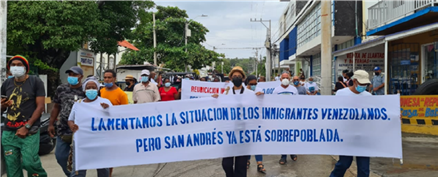
The framing of this demonstration is based on the idea of migration as detrimental to identity preservation, positioning the Raizal people against irregular migration. Under this idea, not only existing irregular migration is a threat to the ethno-racial identity but the one happening in the mainland and possibly expanding in the future. Moreover, the language of overpopulation tells a story of a space that already received more than possible. In this sense, identity is seen as essential to political actions (Bernstein, 2005) and situated in the legal framework of migration law implementation.
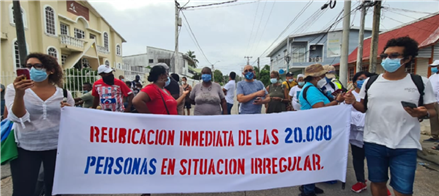
On December 1, 2021, Raizal people met outside the OCCRE office to march to the Governor’s Office. Using the language of the law, this demonstration was framed against the “systematic violation of the Raizal people’s rights” regarding irregular migration to the Archipelago (El Isleño, 2021). Based on OCCRE’S estimations from previous years (Reinoso Rodríguez, 2014), the Raizal people called for measures to relocate around 20.000 people with irregular status in the Archipelago. This other sign stated, “Immediate relocation for the 20.000 thousand people with irregular status.”
Despite the campaign, no relocation measures were taken against irregular migration. A few months later, on April 19, 2022, Raizal people blocked the OCCRE office. As a peaceful demonstration, Raizal people gathered outside the OCCRE office asking for “social justice and human rights respect” (El Isleño, 2022a). Besides framing the blockage in the language of human rights law, the space occupation was an essential element of this campaign. The feeling of being connected to, displaced from, and enclosed in the land reflects how the space occupation as political action is consistent with the Raizal people’s self-understanding. Seeking to meet with the OCCRE Director and have a working table with local authorities, they block transit and the entrance to the Office building. At midday of April 20, 2022, they blocked the office for more than 20 hours (El Isleño, 2022a, 2022b). In this case, drawing from Malkki (1992), the territorialization of identity also means the territorialization of politics.
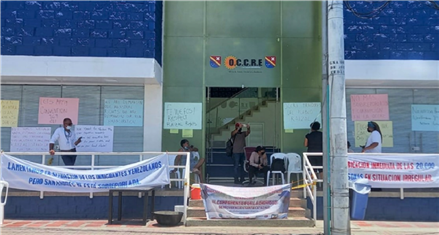
Some of the signs outside the Office stated that “we are demanding our ancestral rights, we are demanding our real emancipation,” “OCCRE traitors of the Raizal people,” and “respect Raizal rights” (El Isleño, 2022b). Under the migration legal framework, these discourses show that protecting ethno-racial differences is the basis of campaigning. Characterizing the OCCRE as a traitor to the Raizal people makes a strong claim based on the protection goal of the migration restrictions, with ineffective implementation becoming treason in relation to ethnicity itself. As such, a legal, political, and self-understanding of the right to be different reflect the interaction between the various forms of identity-making in the Archipelago. For instance, a Raizal leader of the demonstration said, referring to people with irregular status that they are:
[…] mainly challenging what the Constitution states in Article 310, which says that Decree 2762 was created to protect our ethnicity, culture, and identity […] yet we have seen that this Decree has been completely ignored for over 31 years. (Pizarro, 2022a)
By April 25, 2022, the protesters had been blocking the OCCRE for seven days, allowing access to officials but not to people accessing services. At this point, they declared themselves in a “permanent assembly” until different government authorities decided to sit with them in dialogue and agree on some measures regarding the 20.000 people with irregular status (El Isleño, 2022c). They said they requested local authorities to discuss “various issues that are affecting the island, including overpopulation, housing, and even food prices, and if they are not addressed urgently, it will collapse” (El Isleño, 2022a).
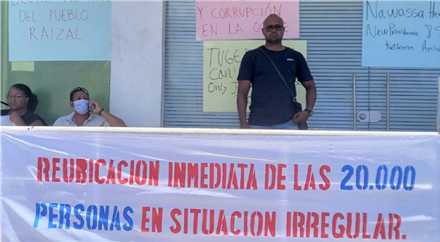
As a “permanent assembly,” the Raizal people positioned themselves as a collective entity on par with government authorities, asserting their ethnicity and self-governing claims, requiring state authorities to seat with them. At the beginning of the demonstrations, the governor of the Archipelago said that he would not engage in a meeting held as part of an occupation outside the existing legal procedures and frameworks. By declaring a “permanent assembly,” the Raizal leaders aimed to legally legitimize the occupation of space and show their willingness to meet in “neutral” locations without leaving the demonstration outside the OCCRE office. One of the leaders said they hoped to find that neutral space because the authorities must “sit with the Raizal people to hear the solutions to the situation that they were facing” (El Isleño, 2022c). In this way, the OCCRE office, its director, and the local authority are perceived by the Raizal people as the entities trough which migration law recognizes the Raizal people as an ethnic collectivity with some informal authority to discuss these issues with the government.
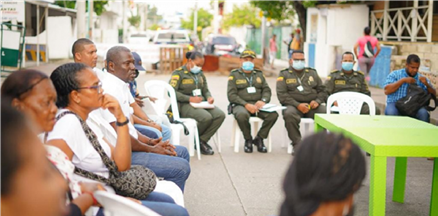
Finally, the working tables were held outside the OCCRE building, in the space occupied by the Raizal people. After approximately 72 days, the Raizal people agreed to lift the blockage (Pizarro, 2022b). The agreement was the creation of a Raizal oversight mechanism for the administrative management of the OCCREE, in the form of a group of Raizal leaders auditing the management of the migration office (Pizarro, 2022c). On July 5, 2022, the OCCRE resumed its services (Radio Seaflower, 2022). To this date, there have not been significant changes in reducing the numbers of irregular migrants in the Archipelago nor in implementing structural measures to reduce the estimations of irregular migration. Added to all the contestations happening in the Archipelago, Raizal identity politics will continue in political campaigning and its interaction with migration restrictions.
Conclusion: A Raizalization process that ethno-racially, legally, and territorially encloses identity politics
In the Archipelago of San Andrés, Old Providence, and St. Ketlina, Raizal politics emerged within the context of the Caribbean. It reflects an identity-making process attached to the spatial configuration of the Archipelago’s geography in which current migration restrictions affect the legal, political, and self-understanding of the Raizal people. The interaction of different forms of identity-making constitutes what I have called a Raizalization process. This process involves the construction of a Creole, hybrid, and fluid Raizal identity, that generate its fixity through the interplay of politics, culture, and law-ethnically, racially, legally, and territorially enclosing “Raizal” activism. In this way, the production of fixity is part of a changeable, transformative, and ongoing process. The complex interaction between migration restrictions, self-understanding, and political campaigning of Raizal people is what allows migration law to fix identity rather than only linearly produce it.
This case study of Raizalization showcases the intricate relationship between migration law and identity politics. It sheds light on complex processes of identity-making to unveil the process by which migration law affects the identities of receiving communities and how the politics and self-understanding in these communities feed into legal frameworks and contestations. This process of identity-making highlights the need to analyse law and legal frameworks in its social form and through the social processes in which it is embedded to see its interaction with the way people understand themselves ethnically, racially, territorially, and politically. Here I find that law does not only produce identities but is also at the core of identity-making as a process. In this way, it emphasises the importance of recognizing diverse identity constructions of political subjectivities and identities, contributing to broader debates on fluidity and hybridity related to spatial configurations and mobility in migration studies.
As I analysed Raizal discourses, there is still much to examine that requires further research. For instance, how the interactive Raizalization process interplays with migrants’ identity-making. Based on a legal and discursive analysis of secondary sources, it also raises the question of whether these discourses truly reflect the internalization of categories and migration law that could be addressed with other methods, such as ethnography. Yet, this study shows that categorization by law affects the political and self-understanding that positions Raizal people against migration in the spatial and legal form of migration law. Recent campaigns against migration indicate a trend towards fixity, essentialism, and authenticity boundaries because the context suggests a growing emphasis on preserving the Raizal identity. However, the changeable nature of identity politics and the Raizalization process also indicates that other social processes of identity-making can potentially influence this trend. The law is not a fixed or definitive determinant of identity but rather an interactive force that intersects with other socio-political forces. This suggests that while recent political campaigns may promote fixity in the Raizal identity, other social processes can disrupt or reshape identity politics over time.