Introduction
One of the great challenges that companies are facing is achieving high levels of business process automation. This corresponds to an evolution that arises from the need to standardize and normalize data and business rules, which define the business areas, through information systems or software applications. Thus, it is important to identify the characteristics of technologies such as RPA for operational, logistical, and business processes in the manufacturing and service sectors.
In recent years, a new cycle of this automation has begun based on the objective of achieving an organizational transformation from process management with the ability to reproduce any repetitive human action to speed up workflows and increase efficiency, which should generate a significant return on investment and resource savings. In this way, it is possible to support the day-to-day processes of the organization to achieve greater operational efficiency and greater impact on the services or products offered to its customers. This is being achieved from RPA technology, which allows the use of software bots by robotizing repetitive operations/tasks defined by business processes, mainly to relieve employee's workload with software robots (Restrepo et al., 2020). Furthermore, Robotic Desktop Automation (RDA) is a small part of a larger group of automation tools that primarily involves a single user, a single desktop, and replaces user's repetitive tasks from daily activities (Kregel et al., 2021).
Although RDA will not be the focus of this research, it is mentioned as an alternative automation technology. Specifically, in Industry 4.0 of the manufacturing and service sectors, new information technologies are revolutionizing the different ways of working within their industries with tools that enable greater performance. Such tools are related to the implementation of interconnectivity, automation, automated learning, and realtime data management (Doyle & Cosgrove, 2019). However, it is important to identify the characteristics of RPA technology for operational and logistic processes in the manufacturing and service sector and its impact in the last ten years. In this way, new aspects of research and the use of these technologies can be generated in alignment with different manufacturing processes.
According to Law 590 of 2000 (Ley Mipymes) and its amendments (Law 905 of 2004); and subsequently by Mincrr Decree957 of June 5, 2019, which is currently in force, companies in Colombia are classified as micro, small, medium and large companies, based on sales in Colombian pesos (equivalent to uvr classification) in the manufacturing, service and commerce sectors (Bancoldex, 2024). In Colombia, 90 % of firms are micro, small and medium-sized enterprises (SMES), which account for 65 % of employment and 35 % of GDP (ANIF, 2021). Regarding the role of SMES, "they are considered the engine of world economic growth. However, they are lagging behind in digital adoption which is being addressed with the use of various assessment tools" (Molgazhdarova & Segura-Velandia, 2022).
This article proposes as its main objective to carry out a systematic review of the literature in relation to RPA technology applied to the organizational management of SMES in the manufacturing and services sector, which allows answering the following research questions:
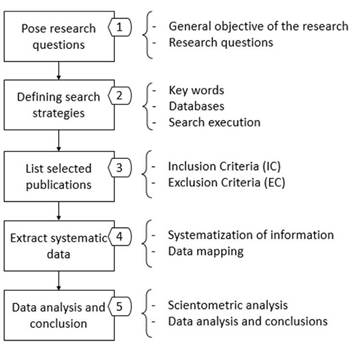
The sections that structure this research work are the following: (i) pose the research questions in accordance with the objective of the article; (ii) define the search strategy based on the keywords and the main databases that allow the execution of the search; (iii) list the selected publications by applying a series of inclusion and exclusion criteria; (iv) extract the most relevant systematic data through the systematization of information and constructing data mapping, and (v) generate a scientometric analysis that allows the findings to be synthesized and concluded.
Literature review
For the development of this section, we start from the definition of concepts related to the research topic. Subsequently, the most representative related works are presented in terms of RPA automation models for improving productivity in organizations in the manufacturing and service sectors.
Concepts
Table 1 lists the main concepts to be addressed in the research.
Table 1
Concepts and descriptions
| Concepts | Description |
|---|---|
| Key operational and logistic activities or tasks | "Activities in purchases, production, sales, and marketing; these are supported by RPA technology in tasks such as receiving the payroll application (by email), reading the application, and entering relevant data in the Enterprise Resource Planning (ERP)" (Axmann & Harmoko, 2020). |
| Robotic Process Automation (RPA) | RPA is a software-based solution that automatically executes repetitive and routine tasks, emulating a human worker by interacting with information systems through existing user interfaces. Its use generates benefits because it is a booming technology, relatively fast to implement, creating solutions and increasing performance, productivity, and efficiency by automating specific tasks that would be developed at a high speed (Pozo-Martínez, 2016). It has been used with the objective of continually improving the work environment for its collaborators and the provision of services in a more agile way, positively impacting the external client (Baviskar et al., 2021). |
| Productivity behavior | The definition of productivity is described by authors from different countries as an economic measure that calculates how many goods and services have been produced for each factor used (worker, capital, time, land, etc.) during a given period (Hradecká, 2019; Baranauskas, 2018). |
| Industry 4.0 in manufacturing | According to Vidosav et al. (2021) , "it is an advanced model of automation of manufacturing systems, based on the connection and decentralized control of cyber-physical systems, using the IoT and the support of cloud computing and Artificial intelligence (AI)." |
| Maturity models in manufacturing processes | The authors Cadena et al. (2020) mention that the maturity of the automation levels used in organizations require models to determine the degree of incorporation of technology used in their processes to identify practices that favor the development of these and are used to standardize them. Referring to the Gartner Inc. Model, five levels are proposed: Level 0. Recognition of operational inefficiencies, Level 1. Understanding of processes, Level 2. Control and automation of the process, Level 3. Control and automation among processes, Level 4. Control and evaluation of the organization and Level 5. Agile business structure. |
| Business processes | For the development of activities there must be an organized and uniform structure in the areas of the company, minimizing process variability. In the case of business models, it is defined as "a set of logically related tasks that are performed in a certain sequence and form, that use the organization's resources to provide results in support of its objectives" (Hernández-González, 2005). |
| Logistics processes | Zoubek and Simon (2021) mention "Internal logistics covers the planning, implementation, control, and flow of efficient storage of materials, semi-finished and finished products in a production environment." |
Related work
In the systematic literature review by Angreani et al. (2020) , 9 types of dimensions were identified for Maturity Models (MM) and their application to Industry 4.0: strategy, leadership, customers, products, operations, culture, people, governance, and technology. After the analysis of 17 primary studies, in response to the questions posed, it is concluded, as mentioned by the authors, that the more categories of dimensions the researchers adopt in their MM, the more complex their construction will be. In addition, research shows that development techniques can be implemented in manufacturing and logistics; in this way, Industry 4.0 has its application relevance in manufacturing and logistics.
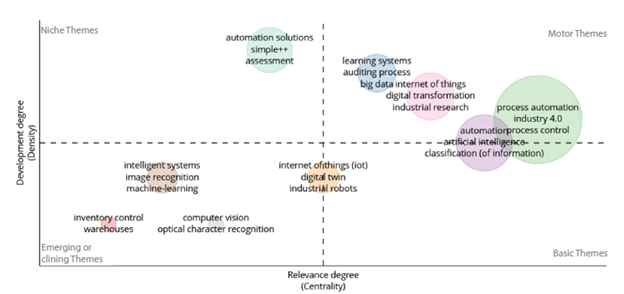
Figure 1 shows a thematic map of the relevant concepts in the research based on the state of the art considering their relevance and development, classifying them into emerging/recurrent, driving, basic, and specialized topics. Ng et al. (2021) in their systematic literature review, seek to provide an analysis regarding the technical and usage challenges of AI in the world, which in turn contributes to the progress of information technology (IT), cognitive, and process automation. Within the research, there is evidence of strong interest in showing the capabilities of intelligent automation to enhance business growth considering the contributions of a series of AI domains from cognitive technology, operational efficiency, and visibility.
The objective of the research presented by Enriquez et al. (2020) is to offer a systematic review in the field of RPA, both in academic literature and of the solutions available and applied in the industry. As mentioned by the authors, the use of RPA technology occurs in a greater proportion in scientific-academic contexts than in industrial ones. This is due to the research interest in knowing the current state of the technology compared to the application that implies time and resources with uncertainty about benefits. The authors conclude that, at an industrial level, the most suitable companies to implement an RPA are those whose business is based on back-office areas (inbound and internal logistics activities), with software proposals focused on specific environments.
Case studies proposed by Marciniak and Stanislawski (2021) intend to show how the application of RPA generates greater impacts when implemented in specific cases than in organizations as a whole, regardless of whether the services of an external entity that offers RPA are used for said implementation or if the company creates its center of excellence or individual local team for the process. However, they highlight that the solution may involve various types of threats (risks) such as the incorrect selection of processes to be automated.
Methodology
For the development of the research, it is necessary to start from a general scenario as a deductive research method where a review system of different publications (Vallejo-Correa et al., 2021): journal articles, and reviews for the productive sectors that constitute the world economy is carried out. After this general analysis, a classification of the manufacturing and service economic sectors as selected study populations is derived to relate their areas, resources, infrastructure, and labor. This way, the characteristics, manufacturing, and logistic models that help define the standardization and maturity of its processes can be observed as part of the systematization of RPA technology in activities and tasks of such economic sectors.
Considering the development of the research for the related works and as a contribution or complement to the research analyzed, three questions are raised that conceptualize the subject matter for the automation process in the areas of inbound, internal, and outbound logistics for industries of the manufacturing and service sectors (Figure 2).

In this stage, three research questions are defined, which were developed from the collection of information from the analyzed manuscripts, related to the subject of study (Figure 2):
Q1: Which authors, in which countries, and how often have research articles been published on topics related to RPA and applied to the productivity of logistic and business processes in the manufacturing and service sectors?
Q2: What are the characteristics of RPA technology that leverage Industry 4.0 in the operational, logistic, and business processes of the manufacturing industry?
Q3: What are the logistic or manufacturing models involving RPA and other emerging technologies for the development of activities and tasks in the manufacturing sector?
Definition of the research question
Definition of the general research objective
The objective of this research is to develop a systematic review of the application of the RPA automation processes in the organizational management of industries in the manufacturing and service sectors, based on articles published between 2011 and 2021 for different geographical areas.
Defining the systematic mapping research question
In this way, the methodological process to be addressed in this article is structured in five phases as shown in Figure 3.
Search execution
Search string definition
For the definition of the keywords and the search equation, we start from:
-
Inquiry or preliminary research on study.
-
Title, study objectives, and research questions.
-
Primary (observation, experts, other field studies, in situ) and secondary (database, documentary, cybergraphy) sources of information
-
Research articles and reviews.
-
Related words or synonyms for reference.
In Figure 4, the main search terms that arise from the above are submitted. It shows related words or reference synonyms to broaden the search spectrum related to the research topic, about the findings of the subject matter. Scopus, WoS, Taylor & Francis, ieee Xplore, Science Direct (Elsevier), and sage journal were analyzed (Appendix 1. Databases consulted), considering the inclusion of sources with impact and relationship to the study, by selecting WoS and Scopus. The resulting search equation was built from the search terms and their different combinations (Table 2).

Table 2
Search equations
Search process
In this phase, the aim is to list the selected publications by applying a series of inclusion (ic) and exclusion (EC) criteria, which allow the search to be prioritized more precisely, defining the relevant writings in the research according to the subject matter (Table 3).
Table 3
Search process criteria
Figure 5 shows the results of applying the filters described above from the ic and EC, using the search equations in the WoS and Scopus databases, getting 89 writings obtained as selected candidates for analysis.
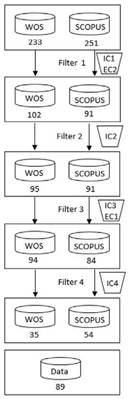
Figure 6 shows the reference keywords for the last years grouped in clusters (Table 4) of concepts that are relatively related to each other, represented by colors and evolution over time; and Figure 7 shows frequency of such word.
Figure 6
Overlay visualization - co-occurrence all keywords
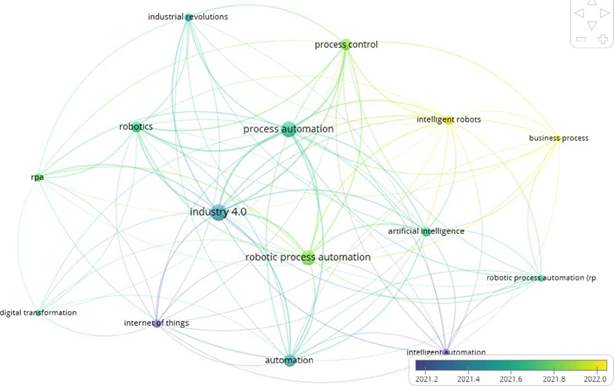
Source: Own elaboration based on vosviewer.
Table 4
WOS viewer keyword result clusters
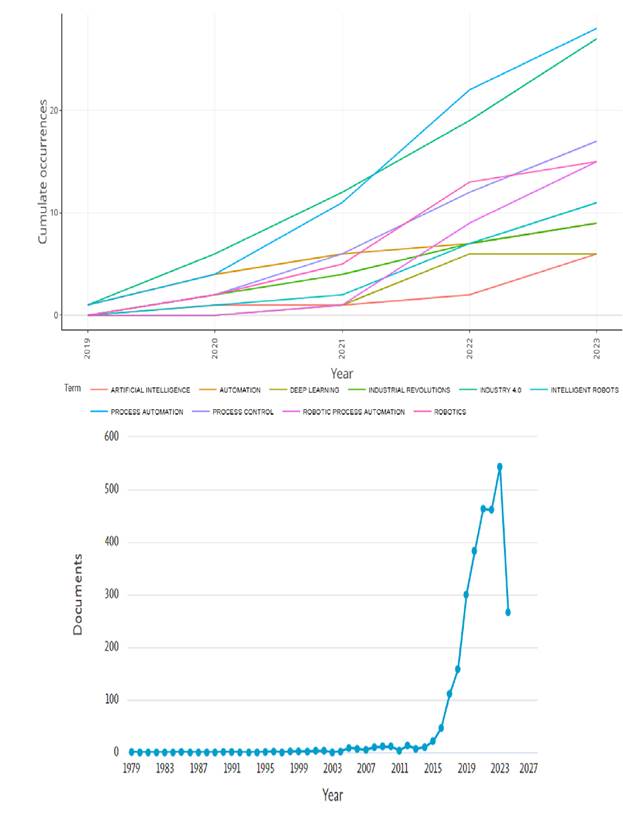
Selection of publications
Considering the 89 potential writings to answer the research questions, 62 articles that respond directly are taken as a research contribution to the construction of knowledge.
Data extraction
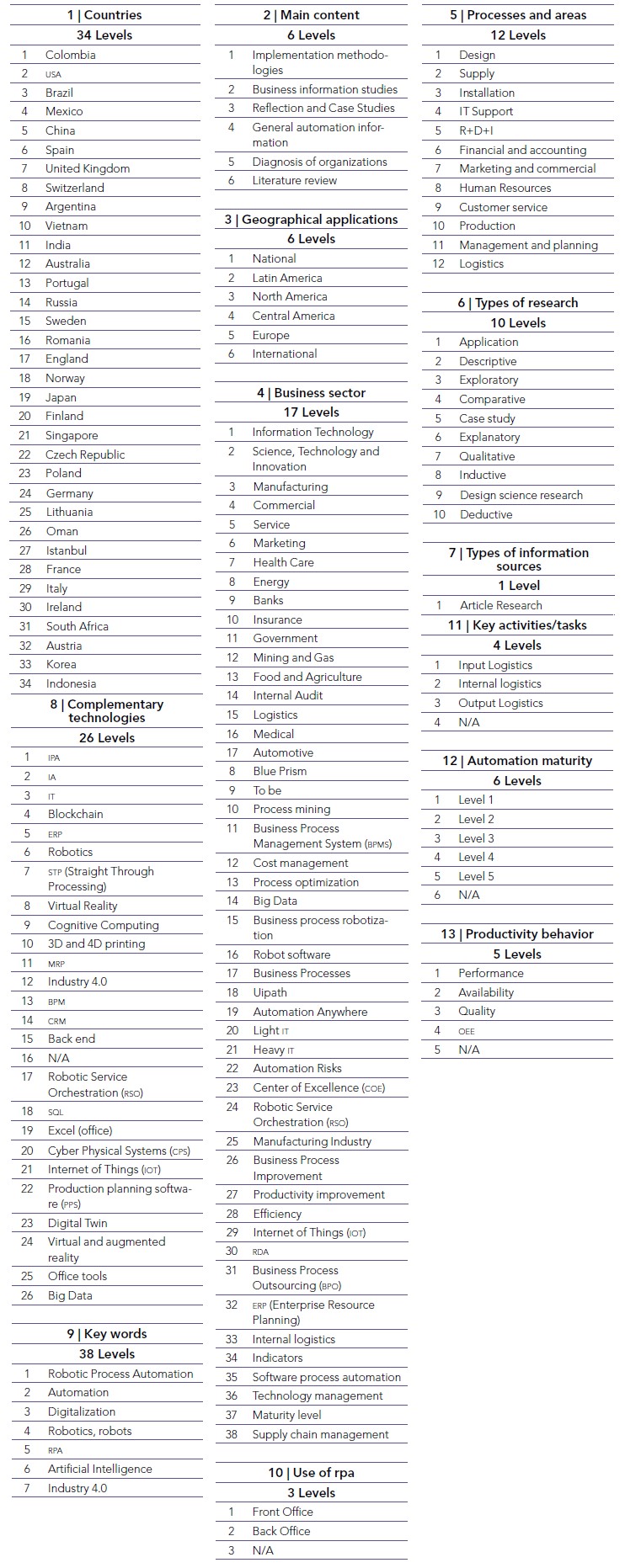
After carrying out the search based on the equations used and implementing the analytics produced by Scopus and WoS, a series of criteria are developed to classify categories that will help information searches and the respective analysis know the development state of the subject matter, nationally and internationally. Next, the criteria and the number of levels used for the analysis of the information are described (Table 5) and Appendix 2 - Detail of the criteria and levels for the analysis of the information.
Table 5
Criteria used for the analysis of information
Discussion and analysis of results
Once the publications are chosen, the analysis of figures and results continues to answer each of the research questions raised, relating the solutions with the help of scientometric analysis.
Authors, countries, frequency of research on topics related to RPA in the manufacturing and service sectors
According to the review of the analyzed literature, the answer to Q1 of this research can be argued, considering for this the interpretation of Figure 8 that shows the relationship among the countries in front of the main contents of the study and the contributions of different authors.
For the manufacturing business sector, the authors Zhang and Liu (2018) from China, Penttinen et al. (2018) , Marciniak and Stanislawski (2021) , and Helo and Hao (2021) from Finland, and Madakam et al. (2019) from India, carried out studies of business information, reflection, and case study and general automation information, whose contribution focuses on the implementation of RPA, the positive and negative impacts, the contribution of complementary technologies (highlighting AI) in the various areas and operations of the company (Figure 8).

In the service business sector, the authors from China Qiu and Xiao (2019) , Maalla (2019) , Ma et al. (2019), and Carden et al. (2019) , carried out studies on business information, reflection, and case study and general automation information, whose contribution focuses on detailing the inputs and implementation resources and RPA support such as data acquisition, the technical level of experts and the use of cloud technology. It also emphasizes on the outputs reflected in the implementation performance results in terms of improvement in efficiency, effectiveness, and productivity for the optimization of business processes.
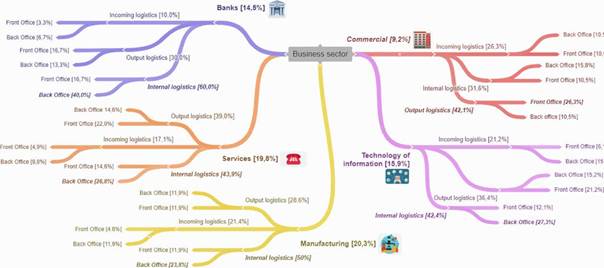
For India, the authors Ruchi et al. (2017) , Hiren-Timbadia et al. (2020) , and Vijai et al. (2020) document automation general information and contribute with comparative analysis for the back office (inbound and internal logistics activities) and front office (outbound logistics activities), about traditional business management models and RPA implementation models.
Figure 9 shows the relationship of the business sector with the highest share of RPA use focused on the back office and internal logistics activity. The authors Hradecká (2019) , Echeverri-Arias et al. (2021) , and (Chuong et al., 2019) have studied benefits and advantages of implementing RPA in production agility, reduction of operating costs, and fraud prevention for the manufacturing sector.
For their part, the authors Kaya et al. (2019) , Mazhar-Hussain (2019) , and Willcocks et al. (2017) highlight, for the service sector, the connection between integrated and complementary systems (Business Process Management System [BPM/BPMS], I4.0, Robotic Service Orchestration [RSO], and AI), the data collection problems, inappropriate information (Qiu & Xiao, 2019), participation of the area involved, testing, execution of the technology, communication strategies with the work team, careful choice of the process to intervene, training, maintenance, security, and technical support (Hallikainen et al., 2018).
Figure 10 shows a great share in the areas of software application, customer service, and production. Specifically for manufacturing processes in the production area. The authors Doyle and Cosgrove (2019) , Chuong et al. (2019) , and Hradecká (2019) argue that Industry 4.0 requires an evaluation of internal logistic preparation and it is necessary to integrate the areas of the production process (Zoubek & Simon, 2021).
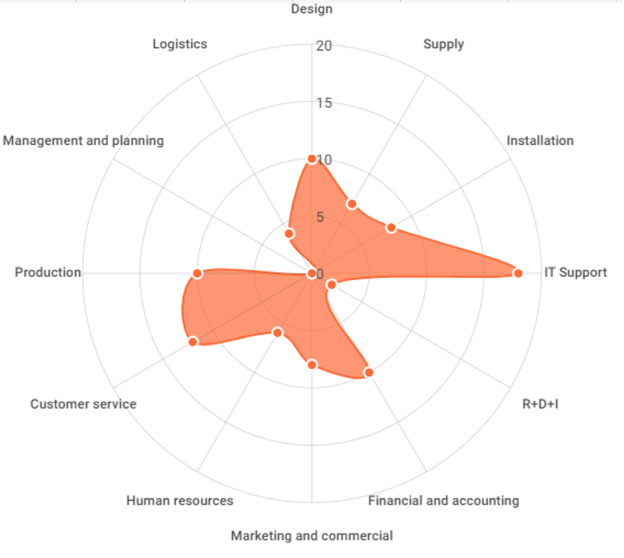
For SMES, the objective of RPA implementation generally seeks digitization, product quality, cost reduction, and production capacity, to improve the business model (Ascúa, 2021). Complementing the above, the authors Nanda and Balaramachandran (2018) , Kedziora and Kiviranta (2018) , (Hallikainen et al., 2018), and Willcocks et al. (2017) , highlight the benefits of RPA and complementary technologies (ROM - robotic operating model, BPM/BMPS, CRM, BPO, Middleware), for the area of customer service for the service sector, in increasing productivity, efficiency, competitiveness, strengthening of supply chain management (SCM) and profitability, in addition to the need to implement roadmaps (Aguirre & Rodríguez, 2017; Mazhar-Hussain, 2019; Donny & Harsiti, 2019).
Finally, the authors Zhang and Liu (2018) ; Madakam et al. (2019) , and Díaz et al. (2018) contribute to the manufacturing and service sectors, in the software application support processes, the importance of using a diagnostic instrument to define the need to apply Industry 4.0, before a preliminary automation phase to assess the level of maturity in RPA implementation (Sobczak, 2021), to then define a team of automation experts.
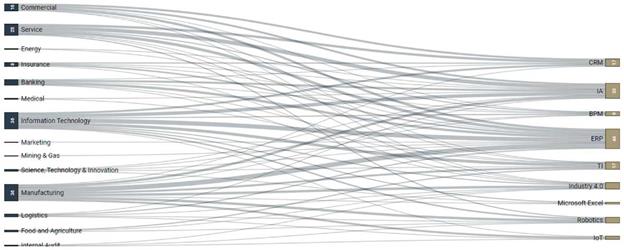
Figure 11 shows that the most representative complementary technologies are ERP and AI, mainly in the information technology, manufacturing, and services sectors. The authors Chuong et al. (2019) and Syreyshchikova et al. (2020) provide, for the manufacturing sector, that RPA technology is complemented by AI, optical character recognition (OCR), CRM, ERP, cyber physical system (CPS), material requirements planning (MRPII) to standardize high-frequency transactions, digitization, use of operational resource data, and business process timing changes (Doyle & Cosgrove, 2019; Geyer-Klingeberg et al., 2018).
Teja Yarlagadda (2018) , for the service sector, contribute to research regarding the impact of automation on labor and salary in the case of financial institutions. He mentions that RPA does not replace existing software applications, but improve them in terms of productivity, data quality, and refined processes (Donny & Harsiti, 2019; Siderska, 2020).
Madakam et al. (2019) contribute to the manufacturing and service sectors with RPA based on robot software or AI workers that can support the detection of fraud in data management, using tools such as virtual agents, machine learning, text analytics for customer queries, business development for handling consumer data and industrial applications (Sander-Tavallaey & Ganz, 2019).
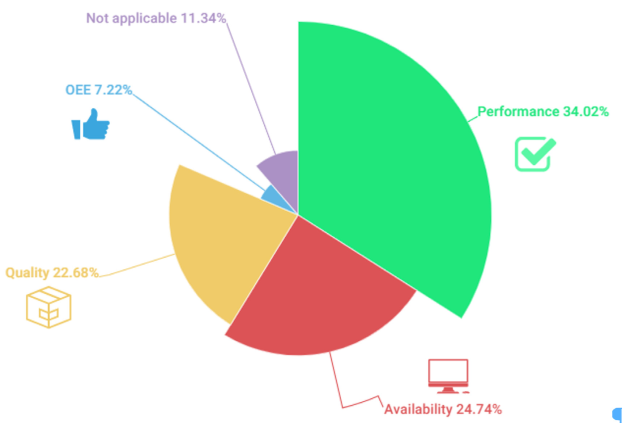
Figure 12 shows that RPA technology evidences the impact on performance achievement for organizations that implement it. For the manufacturing sector, the authors Chuong et al. (2019) , Geyer-Klingeberg et al. (2018) , Radke et al. (2020) , and Hradecká, (2019) agree that the implementation of RPA technology results in a decrease or reduction in operating costs, production times, human failure, while Wewerka and Reichert (2020) , Syreyshchikova et al. (2020) , and Echeverri-Arias et al. (2021) mention the decrease in internal and external failures, as well as quality risks, waste in factors and processes. Geyer-Klingeberg et al. (2018), Hradecká (2019), and Shi et al. (2019) agree on the increase in return on investment and key performance models (KPI) with the implementation of RPA in this sector. Wewerka and Reichert (2020) and Chuong et al. (2019) conclude that productivity levels can be increased, while Doyle and Cosgrove (2019) , Agostinelli et al. (2020) , Radke et al. (2020), and Echeverri-Arias et al. (2021), document improvements about control and planning, compliance levels, data accuracy, on-time delivery, quality, and times in the execution of the processes.
For the services sector, the authors Donny and Harsiti (2019) , Kaya et al. (2019) , and Hofmann et al. (2019) agree that the implementation of RPA minimizes operating costs, added to savings in delivery times, customer response, time spent by collaborators, and minimization of waste and loss of jobs (Lacity et al., 2015; Aguirre & Rodríguez, 2017; Kedziora & Kiviranta, 2018).
Characteristics of RPA in the processes of the operational, logistics, and business areas of the manufacturing industry
To answer Q2, 62 research articles were used that are related to the use of RPA technology, as well as the main pillars that makeup Industry 4.0, developed in the research study areas. The characteristics are classified considering the complementary technologies and their operation in the operational (O), logistic (L), and business (B) areas. Table 6 shows a share of 40.3 % in O, 26.9 % in L and 32.8 % in B, where the most representative percentage is presented in the pillars of cyber-physical systems and integration with 29.9 % each.
Table 6
Contributions by author vs. Pillars Industry 4.0
| Author | Big data | Simulation | IoT | Cyberphysical systems | Integration | ||||||||||
|---|---|---|---|---|---|---|---|---|---|---|---|---|---|---|---|
| O | L | B | O | L | B | O | L | B | O | L | B | O | L | B | |
| Zhang and Liu (2018) | x | x | x | ||||||||||||
| Syreyshchikova et al. (2020) | x | x | x | x | |||||||||||
| Baranauskas (2018) | x | x | |||||||||||||
| Shi et al. (2019) | x | x | x | x | |||||||||||
| Sobczak (2021) | x | x | x | x | x | ||||||||||
| Echeverri-Arias et al. (2021) | x | x | x | x | x | ||||||||||
| Díaz et al. (2018) | x | x | x | x | x | x | x | x | |||||||
| Chacón-Montero et al. (2019) | x | x | |||||||||||||
| Viorel-Costin (2020) | x | x | x | ||||||||||||
| Hradecká (2019) | x | x | x | x | x | x | x | ||||||||
| Chuong et al. (2019) | x | x | x | x | |||||||||||
| Osman (2019) | x | x | x | x | x | x | |||||||||
| Madakam et al. (2019) | x | x | |||||||||||||
| Sangkeun et al. (2018) | x | x | x | x | x | ||||||||||
| Radke et al. (2020) | x | x | x | x | x | x | x | ||||||||
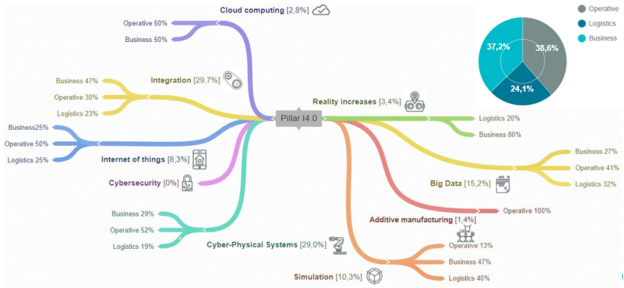
Figure 13 shows the overall scenario of the RPA characteristics from the operational, logistic, and business aspects, relating the main pillars of technology 4.0 in manufacturing organizations. A great impact on the pillar of cyber-physical systems in the operational area and the integration pillar in the business area can be observed. The big data pillar stands out in the operational area, the simulation pillar in the business area and finally the IoT pillar in the operational area. Next, the main pillars of Industry 4.0 and the relationship with the technologies investigated for manufacturing organizations are detailed.
Characteristics of Pillar 1 - Big Data
Process automation must have the experience of experts and project coordinators for the adoption of technology with innovative approaches that adapt to these new pillars based on standardized and mature processes (Osman, 2019). For the tasks, process operational and logistic activities, data, and in particular master data, are essential in digital initiatives, ranging from KPI to optimization algorithms and prescriptive analysis classified as descriptive (Radke et al., 2020).
According to Syreyshchikova et al. (2020) master data presented in an erroneous way impact productivity and the return on investment (ROI) of technology systematization that, in these cases, the intervention of the worker can solve. They mention that due to the complexity and scope of the production tasks faced by a manufacturing company, it is required to process a large volume of high-quality information to make decisions at different management levels.
Characteristics of Pillar 2 - Simulation
This technology helps collect content for different types of formats with different types of sources and devices. These formats can be text, image, audio, or video, between structured and unstructured data. Technology can also collect data from the web through deep learning techniques and with other complementary technologies such as AI, big data, and analytics that will help depend on the technology model used in the organization (Madakam et al., 2019).
As mentioned by Díaz et al. (2018) according to the interventions that Industry 4.0 has had in manufacturing case studies, in supply chains there are uniform models, people involved in the process, who can collect, and process all the information involved in the production process to have better planning and better decision making.
Characteristics of Pillar 3 - Internet of things
When information is collected and distributed via networked smart devices from production, data can be managed and transferred using the web by sharing data with other cloud or on-premises systems and applications in the organization. Integrating modular solutions of the website supervisor (SWM) and Standard Motor Interface (SMI) with finished product storage robotic technology, data reference quantities needed from the beginning of the production process to the distribution of the organization are obtained (Hradecká, 2019).
Characteristics of Pillar 4 - Cyber-physical systems and robotics
According to Radke et al. (2020) , the scope of robotics technology for other cases about the quality of master data helps with the coding of the standard operating procedure, and robot coding skills are acquired with the training materials, prioritizing the needs of the robots and obtaining more agile iterations.
Robotization is closely related to various types of manufacturing industries, including food, clothing, and metalworking. According to Hradecká (2019) , the contribution of technology to the process is mentioned in three aspects: (i) detection of risk points in various stages of production; (ii) review of the manufacturing process to reduce operating and production costs; and (iii) implementation of the computer application of robotic internal audit to ensure interoperability of production data and enterprise information system.
Characteristics of Pillar 5 - Integration
Economic and productive sectors need applications that complement data collection through programming and software application systems, aiding with the organization of an industry such as that of the manufacturing sector. This helps respond to the different internal and external obligations of the company, including accounting, financial, logistical, productive, commercial, and laws imposed by the government (Asatiani & Penttinen, 2016) . As mentioned by Cabello-Ruiz et al. (2022) :
activities in this area are, for example, finance analysis and reporting, sales management, payments, receipts, taxes, and accounting in general. All these activities are systematic, have a significant volume of cases, require an enclosed cognitive effort, and are executed on existing information systems through their user interface.
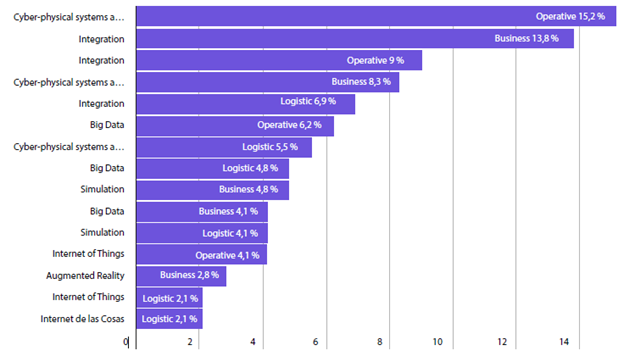
Figure 14 shows in which pillars of Industry 4.0 the study technology is applied with different areas of research hierarchically mentioned.
Figure. 14
Technologies that leverage Industry 4.0 in the operational, logistic, and business area processes
Source: Own elaboration.
According to Sobczak (2021) the implementation of this technology not only seeks to reduce costs, but also allows guaranteeing the continuity of ongoing processes, generating digital innovations with the need for a preliminary phase of implementation of the automation of robotic processes, a role fulfilled by the centers of excellence in the organization.
Logistics and productivity models in RPA technology and other emerging technologies in the manufacturing sector
The models used in logistic and operational areas must be considered in the face of the use of RPA technologies for the development of the activities and tasks of the manufacturing sector.
Logistic models
One of the sectors where the relationship between logistics models and process automation technologies is evident is the agricultural and food industry, registering benefits in the reduction of operating expenses, work savings, time, return on invested capital, and detection of fraud in input purchasing processes through automated audits (Hradecká, 2019). Moreover, as mentioned by Syed et al. (2020) "acknowledging that RPA is not suitable for every process. If applied to unsuitable processes, the development effort rises and inhibits RPA outcomes." In this case, the appropriate logistic models and tasks must be selected in order to achieve the best impact of RPA.
RPA technology is related to other methods used in process management as elements of continuous improvement through Business Process Reengineering (BPR) and BPM, with suppliers, inputs, process, outputs, and customers (sipoc) or Lean models, which could be applied to manufacturing industries from their logistic models (Baranauskas, 2018).
For AI, the use of mobile robots helps Automated Guided Vehicles (AGV) as well as Autonomous Mobile Robots (AMR) that can automatically adapt to production needs. Logistics for Industry 4.0 applies to the human factor, given the control and supervision functions (Zoubek & Simon, 2021). Another key positive aspect is the interconnectivity of all systems, machines, equipment, and items in the warehouse. Other technologies such as cps, IoT, and internet of services (ios) allow the monitoring of materials and handling of units, achieving efficiency in logistic processes such as storage, transportation, packaging, distribution, loading/unloading, and provision of information.
Helo and Hao (2021) state how big data are used for critical information in SCM operations that guarantees reliable information through intelligent search. In operations management, seven areas in which technology is applied are defined: forecasting, inventory management, revenue management, marketing, transportation, supply chain management, and risk analysis.
For Felsberger et al. (2020) , the use of industrial technology with IoT, CPS, Big Data, and AI is related to productivity and efficiency through intelligent and remote management where technological change allows the analysis of large volumes of information, helping identify potential threats and opportunities for the organization and its competitive improvement. Considering the manufacturing sector, the impact on data processing is evident, relating customer satisfaction with the design and manufacturing processes.
Manufacturing models
For the development of activities and tasks in the current manufacturing models, it is necessary to have a technological infrastructure that avoids wear, loss of production, and high resource consumption. This modern technology must meet the demands of Industry 4.0 (Hradecká, 2019).
The internal audit uses automation technology in cases such as the agricultural and food industry, specifically the brewery, to impact productivity in transportation activities, and raw material collection, transforming the implementation of robotics and advanced digital industrial systems. Furthermore, according to Baranauskas (2018) , starting from Anagnoste (2018) , these automated solutions are not only projected to processes and Computer Integrated Manufacturing (CIM) but with greater scope to the entire SCM, the relationship with customers (CRM) and data security in the cloud.
For Syreyshchikova et al. (2020) the application of ERP systems allows simultaneous programming standards considering the stock available in the warehouse and the planned purchase and production receipts for the calculation of MRP, leading to increased efficiency process management, reduction of costs, and higher productivity through automation results such as the reduction of the time necessary for the process maintenance.
For Felsberger et al. (2020) , monitoring the processes allows the control over production and in many cases, does not require human intervention, instead, more reliable automated indicators (KPI) can be implemented, while improving product quality, reducing operating costs in business and production model, helps reduce downtime, increasing overall equipment effectiveness (OEE) with high system availability.
For IT models, according to Zhang and Liu (2018) , the dimensions of communications, competency measurement, governance, association, scope and architecture, and skills are a model of strategic alignment for the business areas.
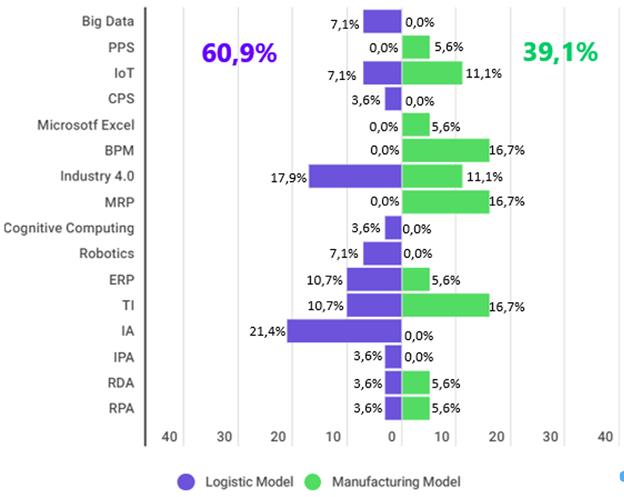
Figure 15 shows identified logistic and manufacturing models concerning the use of RPA technologies and other emerging technologies in the activities and tasks of the researched sector, referencing the percentage of use in each of the organizational models analyzed as a result of the analysis for Q3.
Conclusions
For Q1, it can be concluded that the authors who contributed the most to the use of technology in sectors under this research are C. Vijai (India), Yi-Wei Ma (China), Aleksandre Asatiani, and Esko Penttinen (Finland), with greater frequency of publication of relevant articles as of the year 2017. They highlighted, through comparative studies, the necessary criteria to decide on the implementation of own Centers of Excellence (COE) or hiring an external provider, that is an adjustment to the specific business situation in the manufacturing business sector.
Chacón-Montero et al. (2019) and Zhang and Liu (2018) proposed for the manufacturing and service sectors a guide for the application of technology in the real industry, aligned with its business model, building a test environment for simulation through evaluation, development, and maintenance phases for reducing damage risk to the real system. They concluded that automation technology gradually helps decision-making in SCM (Helo & Hao, 2021) and identified a gap in how to implement AI in the SCM to improve operational performance considering the technology used, the expected impact, the implementation objectives, the people involved, and the expected key performances.
The research for both the manufacturing and service sectors shows the minimization of implementation costs (Chacón-Montero et al., 2019), low technical barriers, non-invasive technologies (Madakam et al., 2019), and execution times of the processes (Osman, 2019). Among the benefits, Baranauskas (2018) mentions the modernization and standardization of workflows, the improvement in the use of resources, the agility of processes, and the quality of customer service, while Helo and Hao (2021) emphasize error detection and flaw classification in data. Madakam et al. (2019) state the importance of alliances with other complementary technologies. Finally, Zhang and Liu (2018) conclude that the greatest benefits of RPA technology are for clients, collaborators, and business.
For Q2, regarding manufacturing organizations, for the main pillars of Industry 4.0 and the relationship with the researched technologies, the following can be concluded:
-
Big Data: Osman (2019) analyzes big data in process automation by considering nine criteria: a) high volume of transactions, b) limited exception handling, c) software manual application processes prone to errors or rework, d) limited human intervention, e) stable environment, f) frequent access to multiple systems, g) high transaction value, h) ease of decomposition into clear IT processes, and i) a clear understanding of current manual costs.
-
Simulation: Osman (2019) states that RPA technology, as mentioned before, has other allied technologies related to simulation in its processes, including AI, machine learning, virtual reality, simulation, industrial automation, and blockchain.
-
IoT: The relationship of automation process with hardware and software technologies is presented from the SMI application and developed from Industry 4.0 and IoT, with the use of physical devices and others that are equipped with electronics, software, sensors, moving parts, or network connectivity to allow these devices to connect and exchange data (Hradecká, 2019).
-
Cyber-physical systems and robotics: a robot in process automation does not exactly mean that robots are going to replace human beings. Even RPA is integrating AI capabilities into a broader set of features. RPA helps turn non-textual content into usable data, directly impacting operational expenses and customer experience benefiting the entire organization (Chuong et al., 2019).
-
Integration: the business environment must line up with new technologies to improve its processes and the performance of its collaborators, adapting it to the different market trends. The integration of new ERP platforms requires an effort in terms of finance, infrastructure, data migration, and information in all areas of an organization to adapt it. If these technologies, such as information systems, are incorporated together with RPA software solutions, they will be destined to generate a greater productive impact on the processes, activities, and tasks that are developed in administrative and operational areas (Viorel-Costin, 2020).
Finally, for Q3 about the logistic models it is concluded that the larger the size of the company, more preparation for its internal logistics, that is, a better level of logistic preparation is required for the repetitive processes (Zoubek & Simon, 2021). For their part, Tortora et al. (2021) also mention the restrictions on the required investment, digital training culture, and limited human talent as dynamics of change for the implementation of digitization. In this way, the implementation of Industry 4.0 technologies demonstrates their effectiveness with some current strengths and weaknesses. For this reason, logistic models of organizations must be adapted to other sectors of knowledge between universities and the state to improve Industry 4.0 in organizations.
Decision-making process with knowledge and data in automated systems and business processes can gradually be improved for strengthening monitoring, analysis, and action, increasing visibility and transparency in the supply chain (Helo & Hao, 2021). It also contributes with attributes in optimization, prediction, modeling, simulation, and decision support.
For manufacturing models, the role of innovation in which digitalization requires those collaborators involved to process a greater amount of knowledge is evident. However, sometimes it is necessary to have supporting software application experts who acknowledge the need to renew capacities and meet market requirements as a value of the organization, remember how the degree of variability of processes can negatively impact the performance of areas and companies, in which the use of automation will allow avoiding these possible events (Felsberger et al., 2020).
Table 7 shows a summary of future challenges based on the needs identified in the literature review presented in this research.
Table 7
Gap identification vs. Future research line
| Research question | Gap identified in the literature | Lines of future research |
| (Wewerka & Reichert, 2020), (Osman, 2019), (Tortora et al., 2021), (Parschau & Hauge, 2020) | 1. How to identify the right process for the successful implementation of RPA technology? 2. How should the organization structure and define goals and scope in the implementation of RPA technology? | |
| Q1 | (Radke et al., 2020), (Zoubek & Simon, 2021), (Shi et al., 2019), (Lacity et al., 2015) | 1. What reforms are necessary in manufacturing and service sector companies prior to the application of RPA technology? 2. What is the roadmap that an sme should apply for the use of RPA technology with its available resources? 3. How to generate business schemes that include process automation from the very beginning? |
| (Viorel-Costin, 2020) | 1. What quantitative tools should be used to measure the impact of the use of RPA technology? | |
| (Helo & Hao, 2021), (Radke et al., 2020), (Šimek & Šperkar, 2019) | 1. What criteria should be taken into account to evaluate the compatibility between the different emerging technologies used for business management? 2. Which emerging technology is most aligned with RPA technology? | |
| Pillar 1-Big Data (Osman, 2019), (Syreyshchikova et al., 2020) | 1. What should the master data requirement for effective use of RPA technology be? | |
| Q2 | Pillar 3-IoT (Shi et al., 2019) | 1. What does the interconnection of processes in the organization for the technical, financial and commercial viability of automation require? |
| Pillar 4-Cyberphysical systems and robotics (Chuong et al., 2019) | 1. What should the level of combination between ai and RPA for the automation of complex and cognitive tasks in the organization be? | |
| Q3 | Logistic models (Zoubek & Simon, 2021), (Doyle & Cosgrove, 2019) | 1. How can a scalable supply chain application of RPA technology be structured? 2. What are the pros and cons of implementing I4.0 in manufacturing smes? 3. What logistics models in the commercial sector can be implemented with I4.0? |
| Manufacturing models (Sobczak, 2021) | 1. What is the impact on the front office for the commercial sector with the application of rpa technology? |
The result and contribution of this systemic review exercise shows parameters for the implementation of RPA technology in the organizational management of SMES for the manufacturing and service sectors. These help generate operational and business strategies for the back office of any company's internal logistics, since the preparation for the integration of alternatives and complementary technologies, in alignment with administrative processes, turn out to be essential. Pillars such as big data, simulation, IoT, integration, cyber-physical, and robotic systems are applications of Industry 4.0 related to the logistic and manufacturing models of SMES. These models should seek, as global results, the increase in productivity levels, the improvement of customer's service and the reduction of the organization's internal expenses.