Introduction
The twenty-first century has been marked by the relentless intensification of globalization and liberalization, particularly in financial markets. As Bauman (2001) observes, these forces have driven the offshoring of production processes to seek lower costs, higher productivity, and competitive advantages for firms. The offshoring trend and technological shifts since the 1980s have radically transformed production systems, leading to decreased vertical integration, decentralization, and widespread outsourcing (Coppelli, 2018).
In today's labor market, these dynamics manifest as employment flexibilization, with costs and risks increasingly transferred to workers. Labor markets are restructuring to accommodate greater female participation and workforce heterogeneity, reshaping social relations to align with market demands (Beneria, 2006). Farné (2003) identifies the relaxation of contractual obligations as a defining feature of contemporary labor markets, spurring the rise of independent, subcontracted, and self-employment arrangements that fall outside traditional formal labor frameworks. This shift has fueled the growth of so-called atypical employment, which diverges from conventional job structures1.
The emergence of atypical forms of employment in the 1990s led economists to examine the issue of job quality (Reinecke & Valenzuela, 2000). Similarly, the implementation of labor reforms in Latin America influenced the quality of employment, prompting significant alterations in the composition by economic activity, employment category, and contractual status (Bustamante & Arroyo, 2008).
In the context of an ongoing deterioration in job quality, characterized by labor precariousness, the advent of the coronavirus pandemic led to the implementation of a series of restrictive measures in Ecuador. The objective of these measures was to reduce the incidence of infection, yet in the economic sphere, the consequences were the opposite. The pandemic led to a fall in consumer spending, which in turn had a detrimental impact on economic activity, and consequently on labor market conditions. The objective of this study is to identify the determinants of the quality of employment in Ecuador before and during the pandemic. This will provide statistical and empirical evidence on the effect that the pandemic had on the quality of employment in Ecuador. In addition, it will help to identify the most vulnerable groups with respect to being in precarious employment.
This paper is organized as follows: Section I presents the introduction, Section II reviews the most relevant theoretical and empirical literature on the determinants of job quality, Section III describes the data and addresses some methodological issues of the empirical model, and Section IV presents the discussion of the main results. Section V presents the conclusions.
Employment Discrimination and Job Quality: A Theoretical Review
The theoretical framework of labor precariousness and job quality remains under construction. However, there is a body of literature which considers this relationship as a central focus of the discussion, although this has not been incorporated into the wider academic discourse ( Posso, 2010). According to Mora & Arcila (2014), there is a theoretical consensus that divides employment discrimination models into two large sets: competitive and group. In the former, individuals seek to maximize their benefits, while in the latter, a group of agents acts against another. The most studied model in economic theory is the competitive one.
The competitive discrimination model comprises two subsets: preference discrimination and statistical discrimination2. The latter has been extensively researched within the field of economic theory of employment discrimination, with wage discrimination being the most extensively studied form of discrimination. The majority of authors concur that wage discrimination occurs when individuals with similar economic characteristics receive different wage rates. Many of the models have postulated the existence of a strong correlation between the observed differences in wages and certain non-economic characteristics such as race, sex or religion.
In their respective works, Farné (2003), Kolev (2005) and Cáceres & Zúñiga (2013) argue that historically, the primary criterion for evaluating job satisfaction was wage remuneration. This is due to the perception that remuneration served as the fundamental driver of employee development. However, in the contemporary era, where the concept of economic development is of paramount importance, and quality of life for a significant proportion of the global population has improved, wages, while a necessary condition, are not sufficient to define the exact quality of a job or the overall job satisfaction of an individual.
Due to constraints imposed by remuneration, it is vital to consider the benefits of a job, including job security and conditions that facilitate career advancement. In this context, it is worth considering variables that may influence the conditions that ultimately determine job quality, such as race, gender and other employee characteristics (Bustamante and Arroyo, 2008).
As Weller & Roethlisberger (2011) state, the concept of job quality emerged in the context of a proposal for an international conceptual framework to analyze working conditions. This proposal was born as a joint initiative of the International Labor Organization (ILO), the European Union (EU) and the European Foundation for the Improvement of Living and Working Conditions.
In the 1990s, the ILO formulated the concept of Decent work, which was subsequently developed by the EU in 2002 when it introduced the issue of job quality. Initially, job quality was related to the satisfaction of individuals with their employment, which introduced a subjective element into the assessment of this satisfaction. This caused difficulties when attempting to define job quality on a global scale. The concept of decent work has been promoted by the ILO, with the objective of promoting specific goals such as fundamental human rights, social dialogue, employment (formal, informal, dependent, and independent), income (amount and security), and social protection (Jiménez & Páez, 2014).
Ghai (2003) and Anker et al. (2003) proposed a set of indicators to describe the qualities associated with what they define as decent work. Both authors agree that employment opportunities, sufficient remuneration, fair work, fair treatment in employment, working hours, stability, job security, reconciliation of work and family life, job security, social protection, social dialogue, labor relations and the socioeconomic environment are categories to be considered in the measurement of decent work. The concept of job quality has been the subject of research from a number of different perspectives. These include psychological and sociological approaches, (focused on issues such as job satisfaction), as well as economic perspectives, (closely associated with the approaches of the theory of segmented labor markets), as proposed by Doeringer & Piore (1983), Reich et al. (1973) and Dickens & Lang (1985, 1993).
The problem of segmentation in the theory of segmented labor markets is analyzed through the prism of job quality. The main characteristic of the job segments proposed by these authors is that their interrelation is minimal and working conditions are significantly differentiated. According to Posso (2010), these authors propose that the labor market be segmented into four distinct processes. The first one involves a differentiation between the primary market, which encompasses high-quality jobs, and the secondary market, which includes low-quality positions. The second process involves a division within the primary sector, distinguishing between professional and managerial roles (which are perceived as high-quality), and routine positions (which are considered low-quality). The third process entails the segmentation of the market based on race, while the fourth involves the segmentation based on gender.
The analysis reveals that the first two types of segmentation are generated by the transition from a competitive economy to an economy with oligopolistic characteristics, a process whereby the labor market ceases to demand a homogeneous labor force and begins to seek more highly qualified personnel with associated relations linked to a hierarchical control process. In contrast, segmentation by race or gender could be linked to a profound process of discrimination in the labor market. In general, labor market segmentation is an explanation that is closely related to the phenomenon of job quality. However, its empirical applications are mainly focused on labor income.
Job quality: A Review of Empirical Studies for Latin America and Ecuador
Since the year 2000, the analysis of the quality of employment has become relevant for Latin American countries, and this has been evidenced by new and growing literature on this topic. Nevertheless, for Ecuador, the empirical research on quality of employment in the Ecuadorian labor market is still in its early stage. Most studies on discrimination in Ecuador have focused on gender and wage differences, which indicates a significant gap in understanding the influence of other socioeconomic characteristics, such as race, age or marital status, on an individual's experience in the labor market.
In Latin America, one of the earliest studies to address this issue was presented by Infante & Sunkel (2004), who measured how the quality of employment evolved and its effect on the occupational structure of the Chilean labor market. According to this work, in order to define the quality of employment, labor insertion in the formal and informal sectors is considered, which explains to a large extent the differences in productivity among those employed.
In their 2007 study, Farné & Vergara address the issue of job quality in Colombia by estimating a job satisfaction function. The authors conclude that atypical contractual relationships have a negative effect on job satisfaction. They posit that by reducing the direct costs of labor, which result from the delaborization of employment relations (recruiting from outside the sphere of the Labor Code), these costs are offset by a loss in terms of greater labor mobility and lower productivity, as well as reduced customer service.
In contrast, Bustamante & Arroyo (2008) empirically examined the impact of ethnicity on job quality. Their analysis compared the employment outcomes of black workers in the city of Cali, Colombia to those of non-black workers in the same city. Additionally, they estimated the effects of certain sociodemographic and human capital variables on access to good-quality employment, controlling for the racial condition of the worker. In order to achieve the stated objective, the researchers employed a generalized logistic model of ordered response, using microdata derived from the continuous household survey (ECH). This model revealed that, in the second quarter of 2004, being a black worker in Cali increased the probability of being in a poor-quality job by 12.2 %.
On the other hand, Posso (2010) employs a switching regression and a quantile regression to identify the characteristics of jobs that influence their quality. He finds evidence to support some of the propositions of the theory of segmented labor markets. In particular, he finds that the valuations of individuals' characteristics vary significantly across the income distribution, especially University education. Marull (2012) examines the quality of employment in Ecuador and Bolivia between 2001 and 2007, using an index encompassing five dimensions: a) labor income, b) working hours, c) labor stability, d) social protection and e) occupational health and safety. The analysis of Ecuadorian data reveals a positive trend in the quality of employment, with an increase in the period under review. This is attributed to improvements in working conditions for self-employed workers. Furthermore, it is evident that women experience a greater disparity in job quality between dependent and independent workers in comparison to men.
In their study, Cáceres & Zúñiga (2013) constructed a job quality index (EQI), comprising four components: workers' income, working conditions, access to social security and working day type. The index enables the measurement of trends in job quality across all regions of Chile over the years 1998, 2000, 2003 and 2006. The results indicate that job quality varies significantly among regions, and that the relative position or rankings of job quality among regions remain stable over time. The job quality index revealed a gender disparity in favor of men over women, as well as a distinction between the adult-senior and adult-young adult groups. However, no differences were observed between the young adult and adult categories.
Flores & Salas (2015) examine gender disparities in job quality within Mexico. This analysis aims to assess the extent and types of inequalities present in labor conditions, taking into account factors such as educational attainment, age, marital status, economic sector, occupational status, and employment formality. The methodological approach in this study involves the use of a quantitative model based on fuzzy logic sets, that considers the characteristics related to remuneration, job stability, and benefits. Empirically, microdata from the National Occupation and Employment Survey (ENOE) during the first quarter of 2014 are used. The main contribution consists of the operationalization of a multidimensional tool that enables a finer appreciation of the concept of gender labor inequality. It is identified that the higher the level of education, particularly postgraduate education, the better quality of employment and the larger the gender gaps.
In turn, Ferrada & Ferrada (2018) attempt to ascertain the employment conditions in Chile. The authors propose partial and synthetic indicators that reveal the situation in the factors of social security, contract, working day and labor income. One of the most notable findings is that there are considerable discrepancies in the estimated indices between males and females, as well as between individuals with different educational backgrounds, geographical locations, company sizes and economic sectors in which they work. These findings provide a rationale for the implementation of public policy initiatives tailored to the context of active ageing.
Orellana et al. (2020) conducted a study of the evolution of job quality in Ecuador over the period from 2007 to 2017. The authors created a composite index comprising two types of weightings for its dimensions: one that assigns equal weight to each dimension and another that gives greater weight to the dimension of remunerations. They used a principal component analysis (PCA) to derive this index. The authors conclude that there has been an improvement in the quality of employment indicator in 2017 in relation to the level observed in 2007. This improvement is mainly attributable to the higher levels of job stability and social security coverage experienced by workers during the study period.
The study by Cuenca & Urrutia (2020) examined Peru's quality of teacher employment based on the construction of a Job quality Index (EQI-D), adapted from Marull's EQI (2012). The index contains information on labor income, working hours, social protection and job stability. In general, the results indicate that the average EQI-D of regular basic education teachers
in Peru is at the level of good job quality. However, there are inequalities among teachers, with those employed in public and low-cost private schools exhibiting the lowest levels of job quality. Villegas (2022) presents an analytical overview of the evolution of job quality in Costa Rica in recent years, with a particular focus on the impact this has had on specific subpopulations. He uses a multifaceted methodology for measurement, analyzing the various elements that contribute to job quality and developing a synthetic indicator to facilitate a comprehensive evaluation.
A review of the relevant academic literature reveals a substantial body of research in Latin America that seeks to demonstrate empirical evidence regarding potential employment discrimination. This research has focused on issues related to gender, ethnic self-perception, wage differentials, and access to quality jobs. With respect to Ecuador, there is a clear opportunity for further research that attempts to demonstrate the existence of discriminatory effects on access to higher-quality jobs for certain population groups. The research will use a generalized ordered multiple regression model.
Theoretical Framework: Constructing the Job Quality Variable
Dependent Variable: Constructing Job Quality from a Synthetic Job Quality Index
Job quality is an ordinal categorical variable constructed from a synthetic index of employment quality. This index is based on four dimensions, monthly labor income, social security benefits, working hours, and labor stability. Below is a detailed explanation of how each component is scored and weighted:
-
In Ecuador, the minimum living wage (SMV)-which is tied to the cost of the basic food basket-serves as a key benchmark for assessing income adequacy. In order to construct an income indicator ranging from 0 to 100, a maximum score of 100 will be assigned if the worker's remuneration is more than three times the SMV of the reference year. A score of 50 will be assigned if the worker's remuneration is between 1.8 and 3 times the SMV. Conversely, a score of zero will be assigned to those workers earning less than 1.8 times the SMV3.
-
Under Ecuador's Labor Code, workers with permanent or indefinite contracts benefit from greater job stability due to strict regulations on contract termination costs. Accordingly, the scoring system assigns: 100 points for permanent/indefinite contracts, 50 points for temporary or occasional contracts, and 0 points for workers without a contract.
-
It is assumed that the higher the level of non-wage benefits, the higher the quality of employment. Consequently, a score of 100 is assigned to workers who have public or private social security that covers pension and health. In contrast, a score of 50 is allocated to workers with public or private social security that encompasses only pension or health benefits. Conversely, a score of 0 is assigned to workers who do not possess public or private social security.
-
In accordance with the provisions enumerated in the Labor Code, the maximum number of working hours permitted per day is proposed to be eight, with a maximum of 40 hours per week for those employed on a full-time basis. In this instance, the individual is allotted 100 points if their weekly work hours do not exceed 40 hours, and zero points if they work more than that.
Table 1 shows how the synthetic job quality index is calculated and presents the different categories within each variable, showing the value that each one receives in the points column. A third column refers to the weighting that each dimension has on the total value of the index, given the score achieved in each one.
Table 1
Job Quality Index Based on the Farné Approach
[i]Note. Based on data from ENEMDU 2019, 2021 and 2022, adapted from Bustamante & Arroyo (2008).
Constructing the cutoff points for the dependent variable job quality
To be able to apply the ordinal logistic regression model, four segments are constructed for the quality of employment taking advantage of the particular discontinuities that each of these segments present; their importance lies in the fact that they allow the influence of each socioeconomic variable of interest to be correctly assessed, controlling for other related factors. In this case, the four output categories of the job quality variable are ordered. The first of them is associated with jobs in a lower category (very poor job quality), passing through intermediate classifications until reaching a higher one (very good job quality).
Job quality is classified into very poor quality jobs (Yj = 1) if the job quality index for workers gives a score ranging from 0 to 25, poor quality jobs (Yj = 2) if the quality index score is between 25 and 50 points, good quality jobs (Yj = 3) if the quality index score is between 50 and 75 points, and very good quality jobs (Yj = 4) if the score is more than 75 up to 100 points.
Independent variables
Socio-demographic Characteristics
Gender: is a dichotomic variable that takes the value 1 for a man and 0 for a woman.
Ethnic group: is a nominal categorical variable with 4 ranges that takes the value of 1 if the person belongs to the mestizo or white ethnic group, 2 if the person belongs to the Afrodescendant ethnic group, 3 if the person belongs to the indigenous ethnic group, and 4 if the person belongs to the montubio ethnic group.
Educational level: is a nominal categorical variable that takes the value of 1 if the level of education reached by the person is primary school, 2 if the person has reached high school, and 3 if the person has reached higher education.
Age group: four age groups are defined, ranging from 18 to 24 years, 25 to 34 years, 35 to 49 years, and 50 years or older. It would be expected that the higher the age group, the more likely the individual is to have a high-quality job as a measure close to the individual's experience.
Region: There are four regions: 1 is Sierra region, 2 represents Costa region, 3 is the Amazon region and 4 represents the insular region.
The structural characteristics of the labor market
Employment status: is a nominal categorical variable that takes the value of 1 if the person is classified as a formal worker and 2 if the person is classified as an informal worker.
Establishment size: is a dichotomous variable that takes the value of 0 if the establishment has less than 100 workers and takes the value of 1 if it has more than 100 workers.
Economic sector: is a nominal categorical variable that takes the value of 1 if the sector in question is agriculture, hunting, fishing, and mining; 2 represents the construction sector; 3 represents the industrial sector; 4 represents the commerce sector; and 5 represents the service sector.
Data
The National Employment and Unemployment Survey (ENEMDU), conducted by the National Institute of Statistics and Census (INEC), is the main source of information for this document. The ENEMDU is the principal source of statistical data on the Ecuadorian labor market. It covers the entire country and provides cross-sectional comparability. This study analyzes the interaction between socio-demographic factors and the Covid-19 pandemic on the probability of accessing quality employment opportunities using the 2019 ENEMDU cumulative surveys (before the arrival of the Covid-19 pandemic), the 2021 ENEMDU cumulative surveys (during the Covid-19 pandemic) and the 2022 ENEMDU cumulative surveys (post- Covid-19 period).
It should be noted that, for the purposes of the exercise developed here, only salaried workers who provided information regarding their monthly labor income, type of contract, employment status, and the ethnic group in which the respondents perceive themselves were selected. Consequently, the subsample resulting from the aforementioned methodology yielded 82,454, 55,378, and 61,181 individuals in the years 2019, 2021, and 2022, respectively4.
The present study is divided into two methodological phases. The first phase focused on operationalizing the concept of quality employment following the proposal of Farné's (2003) synthetic index, which refers to working conditions, based on four categories: labor income, type of contract, social security, and working hours. The resulting synthetic index of job quality was subsequently used to categorize the quality of employment of the population. The second phase consisted of estimating the generalized ordinal logistic regression models. The following section defines the variables and each of their categories based on the ENEMDU.
Data description
The Latin American labor market is characterized by a high degree of heterogeneity. This is due to the coexistence of sectors requiring high-productivity workers (export sector) with those requiring low-productivity workers (domestic market sectors). The latter sector is prone to becoming marginalized or informal. The informal sector is the result of the pressure of surplus labor, when formal jobs are insufficient (Bolaños & Guerrero, 2011).
As illustrated by Table 2, the proportion of jobs characterized by poor and very poor-quality employment conditions exhibited an increase from 37.82 % in 2019 to 44.52% of the overall employment base. This finding suggests that the impact of the pandemic on labor precariousness was 6.70%. A similar observation can be made when examining labor market participation by gender. In 2019, the workforce was predominantly male, with 58% of the total workforce comprising men, while 42% were women. The data indicates that 62 °% of the workforce is male, while 41.38% is female. However, a shift in this dynamic was observed in 2021, with the proportion of male workers decreasing to 58.19%, while the proportion of female workers increased to 41.82 %. By 2022, the proportion of male workers had decreased to 57.65%, while the proportion of female workers had increased to 42.35 %. This suggests that female labor participation increased by approximately 1% during the period of the pandemic. In contrast, the most significant age group in both years is the 35-to-49 age group, followed by the 24-to-34 age group.
The data analysis revealed that during the three-year study period, the majority of individuals employed in both the public and private sectors were concentrated in the Costa and Sierra regions, with a percentage of approximately 90%. This finding indicates a pronounced spatial concentration of employment in these regions. Conversely, in the 2019 subsample, 92.41 °% of respondents identified as mestizo or white, while in the 2021 subsample, this figure decreased to 91.51%. In the 2022 subsample, 92.12 °% of respondents identified as mestizo or white (see Table 2).
In the examined period, changes in labor segment percentages were observed, with a shift in the proportion of workers within both the formal and informal segments. During this period, the percentage of workers in the formal segment experienced a slight decrease from 94.81 % to 93.58%, while the percentage of workers in the informal segment exhibited an increase from 5.19% in 2019 to 6.42 % in 2022. With respect to the level of education, it is evident that over the three-year period under consideration, the proportion of respondents possessing secondary and higher education levels surpassed 40%. An analysis of the results presented in Table 1 reveals that the subsamples are predominantly composed of formal sector workers. Furthermore, it is noteworthy that a considerable proportion of the formal sector employs unskilled labor.
Table 2
Descriptive statistics. Ecuador, 2019, 2021 and 2022 (in percentages)
In summary, the individuals included in the subsample are between 25 and 49 years of age, have completed secondary school or higher education, are employed within the formal sector in well-paid positions.
Methodological approach and model specification
Ordinal Logistic Regression
The dependent variable of the present study is job quality. This variable has been structured to encompass four distinct categories in a specific sequence, with the distances between these categories being unknown.
The ordinal nature of the job quality variable, which is predicated on the premise that the categories are ordered, contravenes the fundamental assumptions of the linear regression model. Consequently, the employment of the ordinal logistic regression model (ORM) is imperative, a model that was pioneered by McKelvey & Zavoina (1975) in the context of an underlying latent variable. This model has also been employed in the field of biostatistics by McCullagh (1980), who referred to the logit version as a proportional odds model (Scott Long & Freese, 2014). As outlined by Hardin & Hilbe (2018), the ordinal logistic regression model (ORM) is derived from the following expression:

Where y* is a latent variable, and the variable y is defined as follows:

The values μ0, μ1 ..., μr Є (-∞,∞) represent the cut-off points. In the most general case, the probability of the ordered model can be presented as the probability density function, denoted as f, while the cumulative distribution function, F, can be used to derive the properties of the general model:

From equation 3, it can be demonstrated that the probability of y i taking on the value K is dependent on the following conditions being met:

From equation (4) and knowing that

 and
and
 , it follows that:

The maximum likelihood function can be expressed as follows:

The maximization of equation (6) results in the estimation of the regression parameters ß's and k- 1, and threshold parameters fa, μ0, μ1
..., μr-1 in the ordered logit model5. The error term, e, is distributed according to a logistic
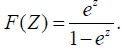 . It can be demonstrated that the estimation of the ordinal regression model begins
with the assumption that the probabilities are proportional (the hypothesis of parallel
lines), which implies that the explanatory variables have the same effect on the probabilities
of each level of the dependent variable. However, when this assumption is violated,
the literature proposes the use of generalized ordered response models.
. It can be demonstrated that the estimation of the ordinal regression model begins
with the assumption that the probabilities are proportional (the hypothesis of parallel
lines), which implies that the explanatory variables have the same effect on the probabilities
of each level of the dependent variable. However, when this assumption is violated,
the literature proposes the use of generalized ordered response models.
Generalized Ordered Response Logit Model: Non-Fulfillment of the Parallel Line's Hypothesis
The Ordered Response Regression (ORR), a method that assumes that the predictor across the various ordered categories is consistent across all cohorts, is an exceedingly restrictive assumption. Consequently, Fu (1998) and Williams (2006) advocate the Generalized Ordered Logit (GOL) model, which relaxes this parallelism assumption. The rationale is that the coefficients associated with different explanatory variables may vary across regressions, as evidenced by Xing (2016). In other words, the effect of explanatory variables on probability may vary above a certain threshold.
As outlined by Hardin & Hilbe (2018), the approach is analogous to the unordered multinomial logit multinomial model,
whereby estimated r - 1 coefficients are derived to represent the effect of transitioning from a level
of the dependent variable's cutoff point below the set to a level above it that is
not included. The cut-off points are defined between the r results, which divide the results into two groups. The first vector of coefficients
corresponds to the partition of the results into the sets {1} and {2, 3, 4, r}. The
second vector of coefficients corresponds to the partition of the results into the
sets {1, 2} and {2, 3, ..., r}. The r - 1 vectors of coefficients correspond to the partition of the results into the sets
{1, 2, 3, 4, ., r - 1} and {r}. The partition is denoted as
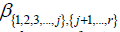 , in this analysis, the set of coefficient vectors belongs to a set of cumulative
distribution functions:
, in this analysis, the set of coefficient vectors belongs to a set of cumulative
distribution functions:

The distribution functions are defined as follows:
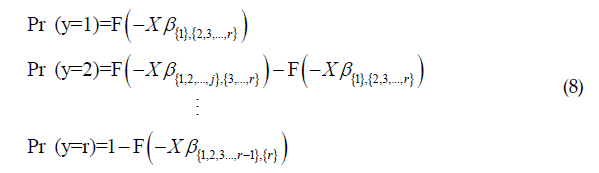
In general, it is stated that:

Simultaneous j - 1 regresions in which the de pendent variable can be dichotomized according to the described partitions are estimated by the maximum likelihood method based on the cumulative density function of the logistic: distribution:
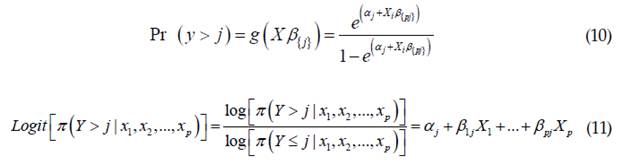
It is evident that the ordinal dependent variable has been segmented into M categories. While the X independent variables have been constrained by a cutoff points (similar to constants) and regression coefficients ß(w).
Empirical Findings and Discussion
As proposed by Williams (2006), the initial step involves the estimation of an ordered logit model through the implementation of maximum likelihood estimation. However, the estimated model does not comply with the assumption of parallel regressions, as indicated by the results of the test of parallel lines in Annex A of this document. Consequently, the ordered logit model is not a suitable statistical instrument for studying the quality of employment, as the estimators obtained are biased and inefficient.
Therefore, it is necessary to estimate a model with a discrete choice variable that overcomes the restriction of the ordered logit model. In this case, it is necessary to estimate a generalized ordered logit model for the years 2019, 2021, and 2022. It is noteworthy that the estimation is conducted for the urban area, and models were estimated for groups of workers per segment. The estimated generalized ordinal logistic regression model demonstrated an acceptable level of fit based on the maximum likelihood test statistics, pseudo-R2, and the Akaike and Bayesian information criteria. Furthermore, Harrell's c index, which extends the area under the ROC curve to the case of discrete choice models (see Annex B), was calculated.
The variables included in the generalized ordinal logistic regression model are sociodemographic characteristics and structural labor market conditions. As illustrated in Table 2, prior to the advent of the Covid-19 pandemic in Ecuador, male employment was correlated with an elevated probability of occupying a superior-quality position in the labor market, with a relative increase of 3.9% compared to female employment. Conversely, male employment exhibited a decreased probability of occupying inferior-quality positions, with a relative decrease of 0.9 % in comparison to female employment.
With respect to the age group, the probability of being in very bad or poor-quality jobs falls with respect to individuals in the 18-24 age group (7.11% and 6.97%, respectively). Conversely, for this same age group, the probability of being in good or very good quality jobs increases with respect to individuals in the 18-24 age group (2.72 % and 11.19%, respectively). However, the probability of being in very bad or poor-quality jobs for individuals in the 35-49 age group is lower than that of individuals in the 18-24 age group (by 11.31 °% and 9.79 °%, respectively). In contrast, the probability of being employed in good or very good quality jobs increases with respect to individuals in the 18-24 age group (2.38 % and 18.72% respectively). This result implies that younger individuals between the ages of 18 and 24 are employed in the most precarious jobs (see Table 2).
Table 3 indicates a correlation between educational attainment and job quality. Individuals with higher levels of educational qualifications have greater access to higher-quality employment. In 2019, it was found that individuals with a secondary education level were more likely to be employed in a job of very good quality (10 % more likely) than those with a primary education level. In contrast, individuals with a secondary education level were less likely to be employed in a job of very poor or poor quality (5.15 % and 2.69% less likely, respectively) than those with a primary education level. Similarly, the results for the higher education level demonstrate that having this level of education increases the probability of being in a very good quality job (by 33.73 %) when compared to the primary education level. Conversely, the probability of being employed in a very bad or poor-quality job is lower (by 14.02% and 12.34 %, respectively) when compared to the base category of primary education level.
Also, the relationship between an individual's ethnic group self-identification and the quality of their employment was analyzed. The results demonstrated that Afrodescendant and indigenous workers were most likely to be employed in the lowest quality positions. The probability of being in very good or good quality jobs is reduced by 1.57% and 4.20 %, respectively, when compared to being mestizo or white, while the probability of being in very bad or poor-quality jobs is increased by 4.90% and 0.89 %, respectively. Similarly, indigenous workers are 4.89 % more likely to be in very poor-quality jobs and 3.35 % less likely to be in very good-quality jobs than mestizo or white workers (see Table 3).
The results of the labor market characteristics were found to be consistent with the theoretical support. The coefficients on the establishment size variable were positive and increased across the cutoff points, indicating that those employed in large establishments were more likely to be placed in better jobs than those employed in microenterprises. In 2019, the probability of being employed in a very good quality job was 19.59 % higher for those in establishments with more than 100 employees than for those in establishments with less than 100 employees. Conversely, the probability of being employed in a very poor-quality job was 25.86% lower for those in establishments with more than 100 employees than for those in establishments with less than 100 employees.
It can be reasonably assumed that the labor segment variable will exert an appreciable influence on the quality of employment. This variable indicates that, for the year of 2019, those who are in the informal labor segment will be less likely to secure positions of good and very good quality. This probability decreases by 1.36% versus the formal segment. The probability of being in poor-quality jobs increases by 22.69 °% and in very poor-quality jobs by 14.36 °%. This effect could indicate a different behavior between these two segments of the labor market.
Table 3
Marginal Effects of the Generalized Ordered Logit at the National Level in 2019
In relation to 2021 (Table 4), it can be observed that gender inequality persists. Men are more likely than women to be employed in jobs of very good quality (2.4%) and of poor quality (0.42%). Similar to the situation observed in 2019, younger workers and those with low levels of education are more likely to occupy poorly paid jobs. This year has seen a worsening of working conditions for younger workers compared to the situation observed in 2019. Furthermore, there is a deepening of the observed differences in job quality with respect to ethnic groups. Workers self-identified as indigenous and Afrodescendant are less likely to be in good or very good quality jobs than in 2019. It is observed that very low- and low-quality jobs are associated with characteristics such as working in small or sole proprietorships and located in the coastal or eastern regions of Ecuador.
Table 4
Marginal Effects of the Generalized Ordered Logit at the National Level in 2021
The differences in access to high-quality employment before and during the Covid-19 pandemic are now more clearly discernible. It is now necessary to ascertain the state of affairs in the labor market in relation to precariousness, following the complete lifting of mobility restriction measures in Ecuador. In order to achieve this objective, the results of the estimation of the marginal effects of the model for the year 2022 are presented below (see Table 5).
Table 5 shows that during the post-pandemic period (year 2022), male individuals are 2.45 % more likely to occupy high-quality jobs than their female counterparts. Conversely, the probability of men occupying low-quality jobs is 2.6% lower than that of women. This result indicates a further intensification of job insecurity for women, given that the probability of women being in the lowest-quality jobs increased with respect to 2019. The younger age group experienced a worsening of conditions in 2022 relative to 2019. Specifically, the probability of being in very bad jobs fell by 10.14%, 15.69%, and 18.17% for individuals aged 25 to 34, 35 to 49, and 50 or older, respectively, relative to younger individuals. Conversely, the probability of being in very good quality jobs increased by 11.69 %, 18.41% and 21.53 %.
The results indicate that in 2022, individuals with a high school education were 7.72% more likely to be employed in a high-quality job than those with only a primary education, while the probability of being employed in a low-quality job was 8.84 % lower. Similarly, the higher education level is associated with a positive effect on the probability of being in a very good quality job, with an increase of 28.46% when compared to the primary education level. Conversely, the probability of being in a very poor-quality job is reduced by 18.34 % (see Table 5).
In 2022, being of African descent reduces the probability of being in a very good quality job by 3.11% compared to being of mixed race or white, while for very poor-quality jobs it increases this probability by 2.38 %. In this sense, the results for the indigenous category are quite similar, since it generates a negative effect of 5.71 % on the probability of being in a very good quality job compared to being mestizo or white, while for very poor-quality jobs this probability increases by 3.99%.
In terms of establishment size, an individual employed in an establishment with more than 100 employees is found to have a 19 % greater probability of being employed in a very good-quality job than in an establishment with fewer than 100 employees. Conversely, the probability of being employed in a very poor-quality job is found to decrease by 27.57 %. Furthermore, individuals engaged in informal labor are more likely to be employed in high-quality jobs, with a 40.11 % increase in probability, while the probability of being employed in low-quality jobs increases by 16.45 %. This indicates that informal sector workers experience a more severe deterioration in their employment situation compared to formal sector workers within the same category respect to 2019 (see Table 5).
Table 5
Marginal Effects of the Generalized Ordered Logit at the National Level 2022
Although the results presented for 2022 cannot be strictly interpreted as a test of labor market segmentation, they provide empirical evidence of the existence of some type of segmentation in the Ecuadorian labor market that cannot be ignored. Therefore, it is plausible to test this possibility by generating regressions per labor segment (formal and informal). This allows for the homogenization of individuals and the verification of the differences in access to jobs according to their quality.
Table 6 presents the marginal effects estimated for workers employed in the formal sector, controlling for labor segment. It is observed that, even controlling for labor segment, men were more likely than women to have a job of very good quality (2.96%) and less likely to have a job of very poor quality (2.47%). However, women were more likely than men to have a job of good quality. Moreover, educational level has a significant impact on the gender gap. Men with higher education are even more likely to have a very good quality job. These results support the hypothesis that women occupy the lower hierarchical positions, which are known as "sticky floors." This leads to lower salaries and, in addition, presents obstacles to obtaining the higher hierarchical positions in the organization, which are known as "glass ceilings."
In terms of age groups, it can be confirmed that even within the formal sector, the least experienced workers (aged between 18 and 24) have the lowest probability of obtaining a high-quality job. This is true even when considering workers with a higher level of education, which serves as an indication of the high importance placed on work experience in Ecuadorian labor market. Additionally, this group is also the most likely to be employed in positions that could be considered poor or very poor quality. With regard to ethnic groups, indigenous and Afrodescendant workers are more likely to be employed in very poor-quality jobs than mestizos or whites. That is to say, after controlling for segment and educational level, the gaps among ethnic groups persist. Finally, it is observed that workers in the Costa and Amazonia regions are more likely to be in poor-quality jobs than workers in the Sierra region (see Table 6).
Table 6
Marginal Effects of the Generalized Ordered Logit at the National Level for the Formal Sector in 2022
Table 7 presents the results for workers in the informal segment. It is evident that women in the informal sector are more likely to be employed in jobs of a notably inferior quality compared to their male counterparts. However, this gender disparity in employment quality becomes less pronounced among individuals with higher education levels. Conversely, men are more likely to be employed in low-quality jobs. It is noteworthy that no statistically significant differences were observed between the probabilities of men and women obtaining very good or good-quality jobs. In the informal sector, younger workers are more likely to be employed in low-quality jobs. However, they are also less likely to be employed in low-quality jobs, and age is not a statistically significant factor in accessing good- or very good-quality jobs in the informal sector. In the informal sector, higher education exhibits a substantially less pronounced impact on the probability of securing certain types of employment based on their quality. In fact, research indicates that in the informal sector, the quality of jobs is not contingent on the educational background of workers (see Table 7).
Table 7
Marginal Effects of the Generalized Ordered Logit at the National Level for the Informal Sector in 2022
Conclusions
This paper seeks to empirically contrast the asymmetric impact of the Covid-19 pandemic on the likelihood of attaining specific quality levels of employment, distinguishing between segments, educational levels, ages, and ethnicities. The analysis of job quality indicates that individuals with higher levels of education are more likely to have access to better jobs, as measured by income, social security, type of contract, and hours worked. Similarly, it is observed that with higher levels of education, the gender effect is diminished. That is, as women increase their level of education, their probability of finding good and very good quality jobs increases. It should be noted, however, that in the non-formal segment of the economy, education does not seem to have a statistically significant effect. On the other hand, individuals located in the Costa or Amazonia regions are more likely to hold lower-quality jobs.
The global pandemic had a significant impact on the probability of individuals occupying lower-quality jobs. Following the pandemic, it was observed that the gender and ethnic disparities in terms of job insecurity increased considerably, with women and indigenous or Afrodescendant individuals experiencing the greatest increase. By 2022, youngest, female, indigenous, and Afrodescendant individuals faced significant challenges in obtaining quality employment, with the probability of these groups being in poor-quality jobs increasing by 2 to 3 percentage points. This suggests that the pandemic may have contributed to discriminatory elements in the labor market towards these groups in particular.
When the regression is examined in a segmented manner (formal and informal), differences with an impact on the possibility of individuals to access higher quality jobs have been identified. In this case, a difference between the formal and informal segments in the incidence of the age group is found. In the former, it is observed that as individuals begin to enter the older age group, the quality of the jobs they access tends to improve regardless of their level of education (whether high school or higher education), which is the opposite of what is found in the informal sector. Similarly, in the formal sector, education contributes significantly to reducing the gender gap, while in the informal sector there is no such effect.
It can be observed that certain characteristics in the Ecuadorian labor market are subjected to penalties. This phenomenon manifests in the conditions under which young workers, women, and ethnic minorities (such as indigenous and Afrodescendant communities) are found following the conclusion of restrictive measures enacted due to the global Covid-19 pandemic. Furthermore, it has been demonstrated that the prevalence of informality significantly impedes workers' access to quality employment opportunities. While higher education can potentially enhance the probability of obtaining better jobs, it is only effective within the formal sector. Based on these findings, it is recommended that public policies prioritize labor inclusion and protection programs to enhance the working conditions of Ecuadorians, particularly those groups facing the greatest challenges.