Production and access to digital technologies are developing at a rapid pace. Society is in a period of transition, where communication models, interpersonal relationships, and professions are constantly changing (Bian & Leung, 2015; Lemos & Santana, 2012). Meanwhile, video games have emerged, and their popularity is an example of the digital world's appeal. Electronic games were originally intended as activities to distract and entertain children and adolescents, but with advances in information technology and the greater dissemination of the Internet, games have reached people of all ages.
Due to technological advancements, online and offline games have become commonplace resources in the 21st century (Lemos & Santana, 2012).
Games can be understood as an opportunity for interaction among players and between players and machines within a fictional universe. This context is created through the individuals' interpretation of the aesthetic standards presented on the electronic screen and through the emotional attachment to the narrative and the actions performed in the game (Bergonse, 2017). Furthermore, games feature an environment with aesthetic standards and interactions specific to each game that require the use of strategies and knowledge of specific rules that cognitively challenge players at potentially complex levels (Lemos et al., 2014).
It is also important to highlight the risks of pathological gaming, characterized by the constant and excessive use of electronic games, which can affect social relations and disrupt an individual's daily life. In these cases, there may be changes in lifestyle that affect mental health and lead to dependence, sleep disturbances, and pathological symptoms observed in mood disorders (Sosso et al., 2020). For example, the DSM-5 introduced Internet Gaming Disorder (APA, 2013) as a research model referring to an addictive pattern related to gaming characterized by compulsive and uncontrollable behavior in which gaming becomes a priority, interferes with daily activities, and causes problems in social, family, and work environments.
The profile of players who show higher levels of game addiction often includes individuals aged between 24 and 30, generally belonging to social classes with greater purchasing power, which provides more opportunities to consume games and contributes to addictive behavior (Sosso et al., 2020). The number of male gamers is also greater, due to differences in the value placed on virtual activities: while men are attracted to the graphic elements and playful experiences, women tend to prefer communication and socialization, opting for other types of media (Wang et al., 2019).
The growing integration of humans and machines is leading to symptoms of technology-related dependence (Lemos & Santana, 2012). Frequent use and constant connection to digital technologies may increase the desire to stay online and contribute to syndromes such as nomophobia, a state of anxiety related to the absence of smartphones (Bhattacharya et al., 2019).
Smartphones, multifunctional and easy to use at any time, provide quick access to information and are central in maintaining relationships and fulfilling daily needs (López et al., 2022). However, dysfunctional use can be harmful, leading to an escape from reality and serving as a strategy to alleviate aversive feelings such as loneliness. Abstinence from smartphone use can lead to physical symptoms, psychological discomfort, frustration, and mood swings (Sales et al., 2018). According to the Brazilian Institute of Geography and Statistics (IBGE, 2019), 81 % of those over 10 years old own a cell phone, with 91 % of them having internet access.
The Brazil Game Survey of 2022 shows that 74.5 % of the Brazilian population are gamers and that 48.3 % play on smartphones (Duarte, 2022). Games for these devices have consolidated mainly because of the variety of genres and free access. However, mobile games can lead to addiction, as players may lose control over the time spent gaming (Wang et al., 2019).
Addicted gamers often spend long periods on virtual platforms and show high loneliness levels (Kanat, 2019), suggesting a positive relationship between these two variables. Loneliness, understood as the perception that relationships are insufficient in number or quality, is associated with negative outcomes such as sadness, emptiness, and difficulties in social interaction (Bian & Leung, 2015). Loneliness can also have consequences for physical health, such as increased inflammation, and for mental health, such as the development of disorders and cognitive deficits (Barroso et al., 2016).
Regarding smartphone use, its association with digital addiction may be influenced by emotional aspects (Jo & Baek, 2023). Previous evidence suggests that smartphone addiction is linked to negative affects (Geng & Liu, 2025) and both positive and negative affects play a key role in understanding digital addiction (Jo & Baek, 2023). These findings suggest that affects may function as a bridge between smartphone use and addiction behaviors, since smartphone use may lead to both positive and negative affects which, in turn, may sustain addictive patterns by serving as an emotion regulation strategy.
Affects represent the emotional dimension that influences how individuals experience their feelings. Positive affects include pleasure, joy, pride, happiness, and enthusiasm, while negative affects include sadness, anger, guilt, and fear (Zanon et al., 2013). Depending on frequency, these affects can influence perceptions of well-being. Studies have linked negative affects to video game addiction, highlighting associations with aggression, impulsivity, frustration, and hostility (Jeong et al., 2020). Similarly, problematic smartphone use is linked to more negative than positive affects, with direct impacts on well-being (Horwood & Anglim, 2019).
The previous sections highlighted the growing integration of smartphones and online games into daily life, as well as their associations with addictive behaviors, loneliness, and emotional experiences. They also emphasized that both smart-phone dependence and game addiction are linked to positive and negative affects and may serve as strategies for emotion regulation. However, despite these conceptual connections, the mechanisms underlying these relationships remain poorly understood. Specifically, it is not yet clear whether positive and negative affects operate as mediating processes linking smartphone dependence and loneliness to online game addiction. Clarifying this mechanism may contribute to a more integrated understanding of the emotional dynamics involved in digital addictive behaviors. Based on this gap, this study aimed to examine the relationships among smartphone dependence, online game addiction, affects, and loneliness, testing affects as mediators. The research protocol was approved by the local ethics committee of the first author's institution (Certificate of Presentation for Ethical Review: 64848022.2.0000.5181).
Method
Sample
The sample consisted of 459 online multiplayer gamers aged 18 to 60 years (M = 25.5; SD = 6.73). The majority were male (79.1 %), single (78.6 %), heterosexual (74.3 %), Catholic (27.7 %), and middle class (88.6 %). Participants mostly reported using the smartphone for 3 to 4 hours per day (32.2 %) and playing games for 3 to 4 hours per day (43.1 %). The required sample size was estimated using Monte Carlo simulations implemented in the lavaan package for R (Rosseel et al., 2017). We specified the hypothesized multiple mediation model with two predictors (smart-phone dependence and loneliness), two mediators (positive and negative affects), and one outcome (gaming addiction). The simulations focused on the total indirect effects of each predictor. Results indicated that a sample size of approximately 300 would be sufficient to reach a statistical power of at least 0.80 to detect these effects. Thus, the present study included a sample size that exceeded the estimated requirement, ensuring adequate power for the planned analyses.
Measures
Game Addiction Scale (GAS-7)
This measure was originally validated by Lemmens et al. (2009) with European adolescents.
To adapt the instrument for the Brazilian context, items were first back translated. The translation involved three bilingual psychologists. More specifically, the first bilingual psychologist translated from English to Portuguese. Secondly, another psychologist translated the Portuguese version back into English. Finally, a third expert compared the two English versions and was able to establish equivalence between the two. Thus, the items translated into Portuguese did not need to be corrected or adjusted. Subsequently, the original version of the instrument in Portuguese underwent a semantic validation process, in which, for convenience, 15 university students participated and were asked to indicate any difficulties in understanding the items. Since no interpretation issues were reported, the final version of the instrument used in this study was finalized.
Further, we conducted two psychometric investigations, splitting the overall dataset into two parts, to conduct exploratory and confirmatory analysis. First, an Exploratory Factor Analysis (EFA) with 210 online gamers (aged 18-60) indicated that a unidimensional model best represented the data. All items loaded on a single factor, with satisfactory indices of reliability (composite reliability = 0.86) and replicability (H-index > 0.80). Parallel analysis, UniCo (0.963), and Mireal (0.281) values further supported the unidimensionality of the measure. Next, a Confirmatory Factor Analysis (CFA) with a sample of 249 gamers confirmed the adequacy of this one-factor structure. Fit indices were satisfactory (x2/df = 2.72; CFI = 0.963; TLI = 0.945; RMSEA = 0.083, 95 % CI [0.052-0.116]), and internal consistency coefficients (Cronbach's α and McDonald's ω) reached 0.80. Together, these findings provide evidence that the Brazilian version of the GAS-7 is a psychometrically sound measure for assessing gaming addiction. The final instrument consists of 7 items to be answered on a 5-point Likert scale (1 = never, to 5 = very often), with higher scores indicating greater levels of gaming addiction.
Smartphone Dependence Scale
Adapted and back-translated by Sales et al. (2018) from the Compulsive Internet Use Scale (Meerkerk et al., 2009), this instrument consists of 14 items related to smartphone use (e. g., "Do you use your smartphone to escape suffering or rid yourself of negative feelings?"). Items are combined into a single factor and answered on a five-point Likert scale ranging from 0 (never) to 4 (very often). The analysis of the measure's factorial structure showed good fit indices for the unidimensional model: x 2 = 151.303; df = 77; p < 0.001; x2/df = 1.964; CFI = 0.988; TLI = 0.986; RMSEA (90 % CI) = 0.046 (0.035-0.057). Satisfactory reliability indices (Cronbach's alpha and McDonald's omega) were observed, both 0.901.
Brazilian Loneliness Scale
This instrument, developed by Russell et al. (1980), validated and back-translated for the Brazilian context by Barroso et al. (2016), contains 20 items (e. g., "I feel unhappy doing so many things by myself) that are combined into a single factor and must be answered on a four-point scale ranging from 1 (never) to 4 (often). The measure showed excellent fit indices for the unidimensional model: x 2 = 342.642; df = 170; p < 0.001; x2/df = 2.015; CFI = 0.992; TLI = 0.991; RMSEA (90 % CI) = 0.047 (0.040-0.054). As for the indicators of internal consistency, α Cronbach's alpha (ω) of0.950 and a McDonald's omega (α) of 0.952 were observed.
Affects Scale
Developed by Zanon et al. (2013), this scale consists of 20 items equally distributed in two factors: positive affects (e. g., "I feel safe in everyday life") and negative affects (e. g., "I often get nervous"). It uses a five-point Likert scale ranging from 1 (it does not describe me) to 5 (it describes me completely). We observed reasonable adjustment indices for the two-factor model with the present study data: x 2 = 739.983; df = 169; p < 0.001; x2/ df = 4.378; CFI = 0.909; TLI = 0.898; RMSEA (90 % CI) = 0.086 (0.080-0.092). The following acceptable Cronbach's alphas and McDonald's omegas were observed for the instrument's factors: positive affects (α = 0.866; α = 0.867), and negative affects (α = 0.823; ω = 0.826)..
Procedure
The research was approved by a competent ethics committee and followed Brazilian guidelines on research with human participants (Resolution CNS 510/2016). Data collection was performed online using the Google Forms platform, disseminated through social media (e. g., Facebook, Instagram, WhatsApp). Participants were informed about the objectives, confidentiality, anonymity, and their right to withdraw. The survey took an average of 15 minutes to complete.
Data analysis
Statistical Package for the Social Sciences (IBM SPSS Statistics for Windows, Version 23.0; IBM Corp., 2015) was used to perform descriptive and correlational analyses. Descriptive analyses were conducted to characterize the sample and examine the distribution of the constructs (e. g., frequency, mean, and standard deviation); non-parametric Spearman correlations were used to examine the relationships among study variables; and multiple linear regression analyses were applied to investigate which variables significantly predict game addiction. To test the mediation models, Jeffreys's Amazing Statistics Program (JASP; Love et al., 2019) was used. For the regression and multiple mediation analyses, the bootstrapping technique with 1,000 repetitions was employed to correct for deviations from normality in the data distribution.
Results
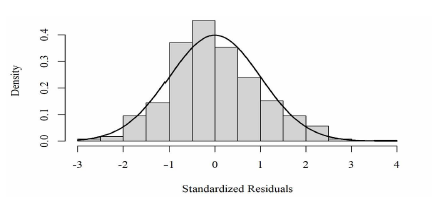
To check the distribution, Kolmogorov-Smirnov and Shapiro-Wilk normality tests were performed, which showed that none of the study variables were normally distributed (p < 0.05). Therefore, we used nonparametric Spearman correlations. The results are shown in Table 1.
Table 1
Correlation Matrix
Mediation Model
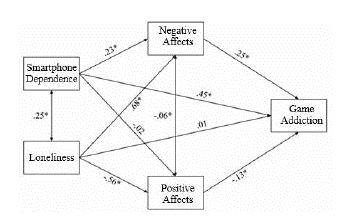
A multiple linear regression analysis and bootstrapping with 1,000 samples showed that smart-phone dependence, positive affects, and negative affects significantly predicted game addiction, explaining 34 % of its variance. Loneliness was a significant negative predictor of positive affects and a positive predictor of negative affects, but did not directly predict game addiction. Smartphone dependence positively predicted both negative affects and game addiction, but had no significant effect on positive affects. Positive affects were a positive predictor of game addiction, whereas negative affects negatively predicted it. Regarding mediation, negative affects significantly mediated the associations between smartphone dependence and game addiction, and between loneliness and game addiction, whereas positive affects mediated only the relationship between smartphone dependence and game addiction. Finally, smart-phone dependence and loneliness were positively associated. The mediation model is presented in Figure 2, and direct, indirect, and total effects are summarized in Table 2.
Table 2
Direct, indirect, and total effects in the mediation model of smartphone dependence, loneliness, and affects on game addiction
Discussion
The present study aimed to examine the relationships among smartphone dependence, online game addiction, affects, and loneliness, testing affects as mediators. To achieve these goals, we tested the following hypotheses: High levels of game addiction are positively related to smart-phone dependence (H1); High levels of game addiction are positively related to negative affects and negatively related to positive affects (H2); High levels of smartphone dependence and game addiction are positively related to loneliness (H3); Positive and negative affects will play a mediating role in the relationship between smartphone dependence and loneliness with game addiction (H4).
As expected in hypothesis H1, the results showed that online game addiction was positively and significantly related to smartphone dependence, suggesting that individuals with higher levels of game addiction were more likely to be smartphone addicted. These results are consistent with those of Liu et al. (2016), who found a higher prevalence of smartphone dependence among gamers (32.4 %) compared to the control group (13.2 %), which consists of individuals who do not have the habit of playing games. Similarly, Bae's (2017) study showed a positive and significant relationship between game use and smartphone addiction, suggesting that using a smartphone to play games has a greater effect on smartphone dependence than seeking entertainment or information through the use of these devices.
The addictive behavior of gamers with smart-phone dependence may be related to the content presented in games. Balakrishnan and Griffiths (2019) analyzed qualitative data from 14 game categories in the Google Play Store and found that the word "challenging" was used most frequently (22.37 %) by users to describe addictive games. This suggests that the more challenging the game, the more likely it is to develop an addiction.
The results of the study also confirm hypothesis H2, considering that game addiction was positively correlated with negative affects and negatively correlated with positive affects. Thus, the more addictive behaviors related to games are observed, the greater the negative affects and the lower the positive affects experienced. These findings are consistent with research by Wang et al. (2019), who found that game addiction was positively associated with depression, loneliness, and social anxiety. In turn, Jeong et al. (2020) found that aggressiveness and impulsivity were risk factors for gaming disorder. All of these constructs represent negative affects in some way.
Game addiction is associated with depressive symptoms through decreased affective balance, indicating more frequent negative affects expressions. Moreover, the flow experience, i. e., high focus on games, plays an important moderating role in the relationship between game addiction and depressive symptoms (Hu et al., 2022). Game addiction affects emotional health, promotes problems such as anxiety and depression, minimizes positive affects, and leads to dissatisfaction with life (Stockdale & Coyne, 2018).
Regarding hypothesis H3, the results showed a positive relationship among smartphone dependence and game addiction and loneliness. In other words, individuals with high smartphone addiction and game addiction are more inclined to experience loneliness. Therefore, the third hypothesis of the study was confirmed. In a survey of college students, Yilmaz et al. (2022) suggest that loneliness and aggression associated with smartphone addiction may represent a bidirectional relationship in which individuals who exhibit high levels of loneliness may develop aggressive behaviors as well as game addiction, while at the same time a tendency toward aggressive behavior may also influence a preference for violent games.
A study conducted with individuals addicted to mobile games identified reports of depression, social anxiety, and loneliness that showed positive relationships among these variables (Wang et al., 2019). Eren and Örsal (2018) found that levels of loneliness are higher in children who are addicted to computer games than in children who do not have this habit. The results obtained in this study also show that negative affects play a significant mediating role in the relationship between smart-phone dependence and game addiction, as well as in the association between loneliness and game addiction. As for positive affects, these were found to play a mediating role in the relationship between loneliness and game addiction only. Therefore, it can be assumed that hypothesis H4 was only partially confirmed.
More specifically, significant indirect effects of negative affects on the relationship between smartphone dependence and game addiction, as well as on the association between loneliness and game addiction, were found. This shows the influence of negative affects on the relationship between these variables, as it is a variable directly related to smartphone dependence, loneliness, and game addiction, as previously discussed, and also reflects the regression values between the aforementioned variables, which are directly proportional. In addition, a significant indirect effect of positive affects on the relationship between loneliness and game addiction was also observed, showing that these affects inversely predicted the relationship between loneliness and game addiction, given the negative regression weights. Notably, loneliness did not have a significant direct effect on game addiction, however the total effect was significant when affects served as mediators, fully mediating the relationships between these variables. Affects also exhibited partial mediations in the relationship between smartphone dependence and game addiction, given that both direct effects and total effects were significant.
As explained above, people with more negative affects tend to stay connected to the smartphone for a longer period of time, which can lead to higher levels of smartphone dependence and thus game addiction. Accordingly, Wang et al. (2019) showed a positive relationship between smartphone game addiction and loneliness, depression, and social anxiety, indicating that addicted gamers have episodes of dissatisfaction that are supported by negative affects.
According to Kim et al. (2015), impulsivity has a positive impact on smartphone use, especially in individuals with high levels of game addiction. Thus, individuals with this addiction have difficulty with self-control and are constantly engaged in gaming because they are unable to reduce this behavior on their own. In addition, addicted gamers may have problems related to emotional health, such as anxiety, depression, aggression, and lower levels of positive affects and well-being (Stockdale & Coyne, 2018).
Lemmens et al. (2011) emphasise that loneliness may have a bidirectional relationship as a cause or consequence of pathological gaming. However, the results of the present study do not show a direct relationship between loneliness and game addiction. Nonetheless, by including negative affects as a mediator, a significant total effect was found. This means that people who feel lonely are prone to game addiction, especially when they experience negative affects. In this sense, Parreira (2022) found that negative affects are a predictor of loneliness, especially in older people. However, the same is true for young people, as shown in the study by André et al. (2020), who found that gamers between the ages of 15 and 29 have problems interacting with games and are more engaged. They also show high levels of loneliness and a desire for stronger friendship relationships, where the setting of gaming can be understood as a way to reduce loneliness and build interpersonal relationships, even if virtual. Thus, the negative correlations between age and the other variables suggest that gaming addiction, smartphone addiction, loneliness, and negative affects are more likely to be associated with young gamers.
One worth noting finding is that positive affects did not play a significant mediating role in the relationship between smartphone addiction and game addiction in our study, suggesting that people with such addiction tend to engage in other activities while using the smartphone, such as using social networks and streaming services when they experience positive affects. For example, Jeong et al. (2016) found that social network use was a stronger predictor of smartphone dependence compared to gaming. Emotional value and perceived pleasure, which are associated with positive affects, are relevant factors for problematic use of content delivery and streaming platforms (Singh et al., 2021).
On the other hand, positive affects were an important mediator in the relationship between loneliness and game addiction. More specifically, these affects were inversely predicted by loneliness and negatively predicted game addiction. This finding can be discussed in light of the concept of aloneness, which is characterized by the state of positivity and a sense of pleasure in being alone without the immediate need for social ties (Almeida, 2020). Individuals with high positive affects are more likely to have episodes of pleasure in being alone (Zanon et al., 2013). Therefore, people who experience solitude may tend to experience positive affects even if they lack social interactions. Thus, people with aloneness experience more positive affects, enjoy their own company in different activities, which are not necessarily online games, which may explain the mediating role of positive affects between loneliness and game addiction, i. e., loneliness leads to less positive affects, and these, in turn, lead to a lesser disposition towards gaming addiction.
Limitations and future directions
Some limitations of the study include the low diversity of the sample, which makes it difficult to generalize the results, and the self-report nature of the instruments used, which may introduce social desirability bias in participants' responses. Moreover, the cross-sectional design precludes causal inferences about the relationships between smartphone dependence, loneliness, affect, and game addiction. Future studies should therefore employ longitudinal or prospective designs to better capture temporal dynamics and test directional hypotheses, as well as experimental approaches to establish causality more robustly. To overcome these obstacles, future research with larger and more diversified samples is also proposed, considering different geographical regions or even cross-cultural samples, as well as the use of implicit measures. Nevertheless, new variables can be explored as mediators or moderators in the relationships among smartphone dependence, loneliness, and game addiction, such as positive mental health, parenting styles, and personal values. Game addiction and technology dependence can also be studied in new contexts that have gained importance nowadays. Future studies could focus on streamers or e-sports professionals. Finally, studies focused on the universe of virtual reality games should also be considered. These possibilities are relevant given the economic growth generated by these platforms and their increasing appeal to wider users.
Conclusion
The present study showed significant associations among game addiction, smartphone dependence, and loneliness, as well as the influence of positive and negative affects on these associations. The study sheds light on the role of positive and negative affects in the association between smartphone dependence and loneliness with game addiction. This invites to reflect on the importance of promoting positive affects and mental health, as well as preventing effects from negative affects and pathologies, particularly in younger individuals, as a protective factor for dysfunctional use of these technologies and media. Overall, this study contributes to the expansion of scientific knowledge on a current topic on which there is still a certain lack of studies especially in the Brazilian context.
Discussions on this topic are essential given the complexity of the problem in the daily life of today's society. Technology dependence and game addiction have the potential to impact core areas of people's lives, such as work, education, and family life. Thus, game or entertainment application developers should have a greater social responsibility to warn and alert their users of the consequences that game addiction or technology dependence can cause beyond their capitalistic interests. It is also important to inform parents, teachers, and peers about excessive use to prevent the negative consequences that dysfunctional use behavior can cause.
This study provides important data to enrich the literature on this topic. In addition, the study shows the importance of raising society's awareness of a current problem, as game addiction and dependence on smartphone use affect a large part of the population. Finally, it is important to point out that games and the smartphone are not the real problem, as they are useful and appropriate tools for daily activities. However, excessive use can lead to problems that affect health and hinder social interaction.
Finally, it is also appropriate to emphasize the key role of psychologists, not only providing psychotherapeutic counseling, but also offering specific guidance related to electronic games. One viable option would be greater flexibility for online consultations and training in strategies that foster closer contact with this population, which would help better address any cases. In addition, events and debates about dysfunctional use of games and digital media in student centers should be promoted as preventive measures and awareness of their potential negative consequences in order to achieve greater mental health, well-being, and quality of life.